

Every April, over 200,000 buyers from 210+ countries fly into Guangzhou to source directly from Chinese manufacturers at the world's largest trade exhibition — 1.55 million square meters, 32,000+ exhibitors, three phases. But attending without a strategy is an expensive mistake: first-time buyers routinely waste 40% of their exhibition time in the wrong halls, chasing unverified suppliers.
This guide gives you the exact playbook experienced sourcing professionals use — from registration and visa logistics to supplier verification and post-fair follow-up — so you leave the Canton Fair with vetted suppliers, confirmed samples, and a clear path to production.
What you'll learn in this guide:
-
The 139th Canton Fair 2026 dates, phases, and which one matches your product category
-
Step-by-step registration, visa, and travel preparation
-
How the Canton Fair compares to Yiwu Market and online sourcing platforms
-
Smart sourcing strategies based on your buyer type (ecommerce, retail chain, or wholesale)
-
The real cost of attending — and why the ROI makes it worth the flight
-
The post-fair follow-up playbook that 90% of buyers skip
What Is the Canton Fair — And Why It Still Matters in 2026
The Canton Fair is the world's largest comprehensive trade exhibition, held twice a year in Guangzhou, China. Launched in 1957 and organized by China's Ministry of Commerce, it hosts over 32,000 exhibitors across 1.55 million square meters — roughly six times the footprint of CES Las Vegas. The 139th edition (Spring 2026) runs from April 15 to May 5, split across three phases that each spotlight different industries.
So why does an offline trade show still matter in an era of Alibaba and AI-powered supplier matching?
Because a product listing can lie. A factory floor cannot.
Online platforms give you photos and chat windows. The Canton Fair lets you touch physical samples, push suppliers on pricing face-to-face, and verify their engineering capability — all in one afternoon. A 2024 post-event survey found over 65% of buyers secured at least one new long-term supplier per session. The three-phase structure means you're not competing with every buyer at once — electronics in Phase 1, home decor in Phase 2, textiles in Phase 3 — giving you focused supplier attention that an Alibaba RFQ blast cannot replicate.
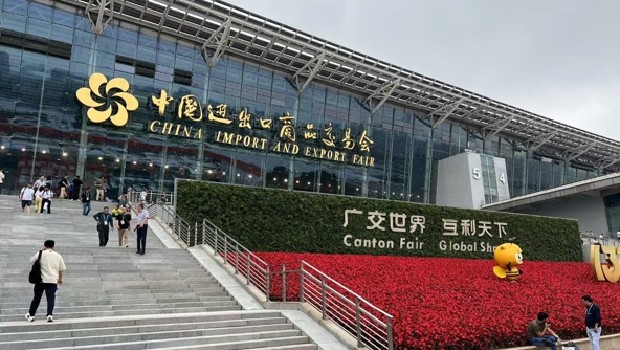
Canton Fair 2026 Dates, Phases, and Product Categories
The 139th Canton Fair (Spring 2026) runs from April 15 to May 5, divided into three distinct phases with changeover periods in between. Each phase targets different industries, so choosing the right one is the single most important scheduling decision you'll make.
Here's the complete timeline:
139th Canton Fair Spring 2026 — Full Schedule
|
Phases |
Dates |
|
Phase 1 |
April 15–19, 2026 |
|
Phase 2 |
April 23–27, 2026 |
|
Phase 3 |
May 1–5, 2026 |
Opening hours: 9:30 AM – 6:00 PM daily (GMT+8)
Venue: China Import and Export Fair Complex, No. 382 Yuejiang Zhong Road, Haizhu District, Guangzhou 510335
The Autumn session (140th Canton Fair) follows a near-identical structure later in the year:
|
Phases |
Dates |
|
Phase 1 |
October 15–19, 2026 |
|
Phase 2 |
October 23–27, 2026 |
|
Phase 3 |
October 31 – November 4, 2026 |
What Each Phase Covers — Key Categories for Sourcing Buyers
Phase 1 (April 15–19): Electronics, Machinery, and Industrial
The most international-buyer-heavy phase. High-relevance categories for sourcing buyers:
-
Household Electrical Appliances, Consumer Electronics (ecommerce trending products, smart home)
-
Lighting Equipment, Electronic and Electrical Products (high-margin FBA categories)
-
Hardware, Tools (bulk distributor staples)
-
New Energy Vehicles and Smart Mobility, Industrial Automation (contract-based industrial sourcing)
-
Also covers: processing machinery, construction/agricultural machinery, new materials and chemical products, vehicle spare parts, motorcycles, bicycles
Phase 2 (April 23–27): Home, Decor, Gifts, and Building Materials
The go-to phase for retail chain buyers and ecommerce home-goods sellers:
-
Kitchenware and Tableware, Household Items (retail shelf-ready, high reorder rate)
-
Home Decorations, Festival Products, Gifts and Premiums (seasonal retail + Amazon gifting niche)
-
Furniture, Building and Decorative Materials (retail chain + wholesale volume)
-
Ceramics, Glass Artware, Gardening Products (OEM potential for private label)
-
Also covers: sanitary and bathroom equipment, clocks/watches/optical instruments, weaving and rattan products
Phase 3 (May 1–5): Textiles, Fashion, Consumer Goods, and Food
The broadest consumer-facing phase — ideal for fashion brands, Amazon FBA lifestyle sellers, and FMCG importers:
-
Men and Women's Clothing, Sports and Casual Wear (apparel brands, retail chains)
-
Shoes, Cases and Bags, Fashion Accessories (ecommerce scaling categories)
-
Toys, Children and Baby Products (high-compliance, high-margin for retail)
-
Home Textiles, Personal Care Products, Pet Products (recurring wholesale volume)
-
Also covers: textile raw materials, food, medicines and medical devices, office supplies, traditional Chinese specialties
The Canton Fair also hosts an Import Exhibition (International Pavilion) during Phases 2 and 3. Check the official Canton Fair website for the latest section updates.
Which Phase Should You Attend?
|
Your Business |
Recommended Phase |
|
Amazon FBA / ecommerce (electronics, smart home) |
Phase 1 + Phase 2 |
|
Amazon FBA / ecommerce (fashion, lifestyle) |
Phase 3 |
|
Retail chain (home goods, gifts) |
Phase 2 |
|
Retail chain (clothing, sports) |
Phase 3 |
|
Bulk distributor (industrial, hardware) |
Phase 1 |
|
Bulk distributor (consumer goods) |
Phase 2 + Phase 3 |
|
First-time buyer (exploring) |
Phase 2 — broadest variety, lower MOQs, most beginner-friendly |
Pro tip: If your sourcing list spans multiple phases, plan to stay in Guangzhou for the full three weeks. Many experienced buyers attend Phase 1 and Phase 3, using the changeover days (April 20–22 and April 28–30) for factory visits in nearby manufacturing hubs.
Beyond the Fair: Nearby Sourcing Hubs Worth a Side Trip
The Pearl River Delta is China's densest manufacturing region, and you're already in the center of it. Use the changeover days (April 20–22 or April 28–30) to visit nearby clusters — zero wasted exhibition time.
|
Hub |
Travel Time |
Best For |
|
Foshan |
30 min metro |
Furniture, ceramics, bathroom fixtures (Phase 2 buyers) |
|
Shenzhen |
1 hr high-speed rail |
Consumer electronics, LED lighting, IoT devices (Phase 1 buyers) |
|
Dongguan |
1 hr by car |
OEM toys, shoes, garments (Phase 3 buyers) |
|
Yiwu |
3 hrs high-speed rail |
Low-MOQ gifts, stationery, holiday items — 75,000+ suppliers in one complex |
How to Register, Get Your Visa, and Prepare Before You Fly
The biggest mistake first-time Canton Fair buyers make isn't at the exhibition — it's in the weeks before departure. Missed registration deadlines, visa confusion, and last-minute hotel scrambles turn a $3,000 sourcing trip into a chaotic waste of time. This section gives you the exact checklist, in order, so nothing falls through the cracks.
Step 1: Register Online (Free for Buyers)
Registration for the Canton Fair is free for international buyers, but you must complete it before arrival. The process runs through the official Buyer E-Service Tool (BEST) system on the Canton Fair website.
If you've attended before (returning buyer):Log in with your existing credentials and update your company information for the 139th session. Full instructions are available on the Canton Fair Returning Buyer Login page.
If you're a first-time buyer:Create a new account, submit your business details (company name, industry, business license or tax ID), and apply for a Buyer Badge. Step-by-step instructions are on the Canton Fair New Buyer Registration page.
Important timing note: Pre-registration for the 139th session opened on February 14, 2026 and has since closed. If you've already registered, log in to confirm your credentials and download your QR code entry pass. If you haven't registered yet, check the official Canton Fair website for on-site registration options or late registration windows — availability varies by session.
Download the Canton Fair mobile app after registration for exhibitor search, booth maps, and meeting scheduling — it's your primary navigation tool inside the complex.
Step 2: Sort Out Your Visa (or Confirm You Don't Need One)
China's visa-free policy has expanded dramatically. As of February 2026, citizens of approximately 50 countries can enter China visa-free for up to 30 days — more than enough for any single Canton Fair phase plus factory visits.
Key visa-free countries for sourcing buyers:
-
Europe: France, Germany, Italy, Spain, the Netherlands, Switzerland, Poland, Sweden, and 25+ other EU nations
-
UK & Canada: Added February 17, 2026 — per China's MFA announcement, 30-day visa-free through December 31, 2026
-
Asia-Pacific: South Korea, Japan, Australia, New Zealand
-
Middle East: Saudi Arabia, Kuwait, Bahrain, Oman
-
South America: Brazil, Argentina, Chile, Peru, Uruguay
If your country is on this list: Just book your flight and bring your passport (valid for 6+ months). No application needed.
If NOT (including the United States): You need a China M Visa (Business Visa) — gather your passport, application form, photo, and a business invitation letter, then submit to your nearest Chinese consulate. Processing takes 4–7 business days; apply at least 6 weeks before travel.
240-Hour Transit Visa Exemption: US and 53 other countries can stay up to 10 days visa-free when transiting through Guangzhou. Technically enough for one phase, but a proper M Visa is recommended if you plan factory visits outside Guangdong.
Step 3: Book Hotels 2–3 Months in Advance
Hotel rooms near the Canton Fair Complex disappear fast. During fair weeks, prices in the Pazhou area (where the exhibition is held) spike 2–3× compared to normal rates. Experienced buyers book their accommodation the moment they register.
Best location strategy by priority:
Priority 1 — Pazhou / Haizhu District (walking distance or one metro stop from the complex). This is the ideal zone. You save 30–60 minutes of daily commuting and can return to your hotel during lunch breaks. Hotels here book out fastest — expect to pay $120–250/night during fair weeks.
Priority 2 — Zhujiang New Town / Tianhe CBD (3–4 metro stops away). A solid backup with more hotel options and better restaurant selection. The metro ride to Pazhou takes about 15 minutes.
Priority 3 — Anywhere on Guangzhou Metro Line 8 (direct line to the complex). As long as your hotel is on Line 8, your commute stays simple. Pazhou Station serves Areas A and B; Xingang Dong Station serves Area C.
Booking tip: Chinese hotel platforms (Trip.com, Ctrip) often have better inventory and pricing for Guangzhou hotels than global platforms. Book with free cancellation if your travel plans might shift.
Step 4: Pre-Fair Preparation Checklist (2–4 Weeks Before)
Shortlist exhibitors. Search by product category on the Canton Fair platform. Identify 20–30 target booths, note hall/booth numbers, and send introductory messages — serious suppliers will agree to reserved meeting times before the fair.
Prepare a sourcing brief. One-page document covering: target products, specs, MOQ range, target prices, required certifications (CE, FDA, UL, etc.), and desired Incoterms (FOB/CIF/DDP). Hand it to every supplier you meet.
Set up WeChat. 90%+ of Chinese suppliers exchange WeChat on the exhibition floor — not email or WhatsApp. Set up your account, add a professional photo, and test QR code scanning before departure.
Prepare payment tools. Set up Alipay or WeChat Pay (both accept international credit cards) for daily expenses. Carry ¥1,000–2,000 RMB cash as backup.
Pack smart. Walking shoes (15,000–20,000 steps/day), portable charger, lightweight backpack for catalogs/samples, and 200+ business cards.
Arrive 1–2 days early. Adjust to GMT+8, test your metro route, and attend pre-fair networking events organized by industry associations.
For a step-by-step walkthrough covering registration, visa application, and travel planning, read our complete guide How to Attend the 139th Canton Fair 2026.
If you want a detailed preparation guide, read our Canton Fair Buyer Checklist covering documents, business tools, apps, and negotiation planning.
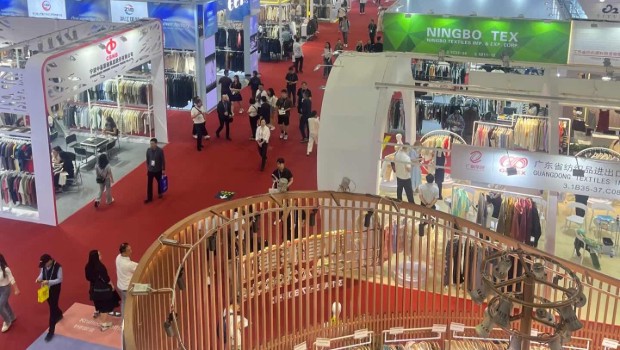
Canton Fair vs. Yiwu Market vs. Online Sourcing — Which Route Fits Your Business?
Choosing how to source from China is not a single decision — it's a strategy question with real cost implications. The Canton Fair, Yiwu Market, and online platforms like Alibaba each solve different problems for different buyer profiles. Picking the wrong channel doesn't just waste time; it locks you into supplier relationships that quietly erode your margins for years.
Here's how the three major sourcing channels compare across the dimensions that actually matter to procurement decisions:
The Full Comparison
|
Dimension |
Canton Fair |
Yiwu Market |
Online Sourcing (Alibaba, Global Sources) |
|
Best for |
Verified manufacturers, custom OEM/ODM, high-value contracts |
Low-MOQ ready-made products, small commodities, gift items |
Initial supplier discovery, price benchmarking, repeat orders |
|
Supplier type |
Direct factories + large trading companies (32,000+ exhibitors) |
Showroom agents + small workshops + wholesalers (75,000+ shops) |
Mix of factories, trading companies, and resellers — verification required |
|
MOQ flexibility |
Medium to high (most exhibitors target volume buyers) |
Very low (many accept 50–500 pcs) |
Varies widely — some factories list low MOQ but enforce higher minimums after inquiry |
|
Product inspection |
Handle physical samples on the spot; see material quality, finishes, and packaging |
Walk showrooms and touch stock products; limited customization samples |
Photos and videos only until you pay for samples to be shipped |
|
Customization (OEM/ODM) |
Strong — many exhibitors bring engineering teams and can discuss specs in real time |
Weak — most Yiwu suppliers sell stock products with minor logo customization |
Possible but slow — back-and-forth messaging over weeks, often with miscommunication |
|
Supplier verification |
Medium — exhibitors are vetted by Canton Fair organizers, but due diligence still needed |
Low — no centralized vetting; supplier quality varies dramatically between floors |
Low — Gold Supplier badges are paid, not earned; independent audits essential |
|
Negotiation leverage |
High — face-to-face negotiation with multiple competing suppliers in one hall |
Medium — prices are already low but margins are thin; limited room for bulk discounts |
Low to medium — you're negotiating blind without seeing production capabilities |
|
Speed to first order |
Fast — you can confirm specs, agree on pricing, and request samples in a single meeting |
Fastest — buy off-the-shelf products and ship the same week |
Slow — sample rounds, messaging delays, and trust-building take 4–8 weeks |
|
Cost to participate |
$2,000–3,500 (flight + hotel + meals for one phase) |
$1,500–2,500 (flight + hotel + local transport for 3–5 days) |
Free to browse; costs accumulate in samples, quality failures, and wasted time |
|
Risk level |
Lower — physical verification + Canton Fair's exhibitor screening |
Medium — no screening, but you see real products before buying |
Higher — product-listing fraud, sample-bait tactics, and quality inconsistency are common |
|
Ideal annual spend |
$50K–$10M+ |
$5K–$200K |
$1K–$500K (or as supplement to offline sourcing) |
When to Choose Each Channel
Choose the Canton Fair when your sourcing involves custom specs, quality certifications (CE, FDA, UL), or annual order values above $50K. Face-to-face negotiation and sample inspection cannot be replicated online.
Choose Yiwu Market when you need ready-made, low-MOQ products — stationery, kitchen gadgets, phone accessories — where the product already exists and you just need competitive pricing. Many buyers combine a Canton Fair trip (custom/OEM) with a Yiwu visit (stock fills) in the same China trip.
Choose online sourcing when you're benchmarking prices across dozens of suppliers before narrowing your shortlist. But note: an online quote of $2.30/unit often means $2.30 quality — while a Canton Fair supplier quoting $2.80 actually holds tolerances and passes QC. The cheapest quote wins the spreadsheet; the reliable supplier wins the reorder.
The Smart Strategy: Combine All Three
The most effective sourcing operations don't choose one channel — they layer them.
Phase 1 (Research): Use Alibaba and Global Sources to identify product categories, benchmark pricing, and build a preliminary supplier list. This costs nothing but time.
Phase 2 (Verification): Attend the Canton Fair to meet your shortlisted suppliers face-to-face, inspect samples, negotiate terms, and verify production capabilities. This is where you convert online leads into real partnerships.
Phase 3 (Fill gaps): Visit Yiwu Market for stock products, low-MOQ gap-fillers, and quick-turn items that don't require customization. Bundle this into the same China trip for maximum efficiency.
Phase 4 (Ongoing): Use online platforms for reorders with verified suppliers. Once trust is established through in-person meetings, the day-to-day ordering process moves back online — but now you're ordering from suppliers you've physically vetted, not strangers.
A China-based sourcing agent can accelerate this cycle — pre-screening exhibitors before the fair, providing real-time translation during meetings, and handling post-fair factory audits and sample follow-ups. Need help deciding which sourcing route fits your business? Talk to our team.
Still not sure whether the Canton Fair is the best sourcing option for your business? See our detailed comparison of Canton Fair vs Yiwu Market vs Alibaba to understand the differences.
Smart Sourcing Strategies at Canton Fair — Tailored by Buyer Type
The tactics that work for an Amazon FBA seller testing a new product line are fundamentally different from those for a retail chain buyer locking in annual supply contracts. Here's the exact approach for four buyer profiles.
If You're an Ecommerce Seller (Amazon FBA, Shopify, D2C)
Your goal: identify 3–5 suppliers who can deliver small initial batches with quality consistency to scale.
Before the fair, define your validation criteria: factories that offer small MOQs for test runs (100–500 units), FBA-compliant packaging (poly bags, FNSKU labels, master carton specs), and willingness to iterate on product design between runs.
On the floor, prioritize booths showing product variations — a booth with 15 LED desk lamp variants signals active R&D capability. Ask immediately: What's your MOQ for a test order? Can you handle FBA prep in-house? What's your sample turnaround time?
Hidden opportunity: Products shown at Canton Fair Phases 1–2 often appear on Amazon's trending page 6–12 months later. You're seeing next season's bestsellers before competitors.
After the fair, request samples from your top 3 suppliers. Run them through QC side by side. Place a test order (100–300 units) with the winner, and only commit to volume after the first batch passes inspection.
If You're a Retail Chain Buyer (10–200+ Stores)
You're sourcing shelf-ready products across multiple categories with seasonal deadlines. One late shipment leaves empty shelves across dozens of stores.
Before the fair, map your buying calendar against Canton Fair phases. Need Q4 holiday items? Phase 2 (April 23–27) is your window — work backwards from shelf date to set non-negotiable timelines for every supplier conversation.
On the floor, verify what online sourcing cannot: material quality in hand, packaging durability under stacking, and compliance certifications. Bring your checklist (CE for Europe, CPSC for US) and ask: Have you exported to my market? Show me test reports from a recognized lab.
Leverage your volume: Negotiate beyond unit price — push for 30–60 day T/T after B/L, free tooling amortization, and guaranteed production slots during peak season. Suppliers compete for retail chain contracts because they provide factory utilization stability.
Avoid single-sourcing: Qualify at least two suppliers per product category — a primary and a backup. Supply continuity matters more than the lowest quote.
If You're a Bulk Distributor or Wholesaler ($300K–$10M Annual Spend)
Your Canton Fair mission: pierce through trading companies to reach source factories, benchmark your current pricing against 30 alternatives in one hall, and find capabilities your existing supply chain lacks.
Before the fair, prepare a benchmark sheet for your top 20 SKUs with current unit costs, lead times, and defect rates. Target: find at least 3 factories that beat your current landed cost while maintaining quality.
On the floor, skip polished corporate booths. Head to booths where the factory owner sits next to a production engineer. Ask for production capacity data, annual output volume, equipment age, and current export markets. A factory shipping to European retail chains already understands quality expectations.
Negotiate at scale: Push for EXW pricing, consolidated shipping through your own freight forwarder, and quarterly pricing reviews tied to raw material indices. A 3–5% unit cost reduction at volume translates to tens of thousands annually.
Combo sourcing: Find 3–4 factories producing complementary products in the same industrial cluster, consolidate output at a local warehouse, and ship as one full container — slashing per-unit shipping costs.
If You're a First-Time Buyer (New to China Sourcing)
Don't wander randomly collecting business cards. Cards without context are worthless within 48 hours.
Before the fair, narrow your focus to exactly one product category. One category = one phase, manageable halls, and enough context to judge quality differences and pricing patterns across comparable suppliers.
On the floor, use the "3-visit rule." Day 1: walk target halls, identify 10–15 potential suppliers. Day 2: revisit top 5 for detailed spec/pricing conversations. Day 3: narrow to final 2–3 and negotiate sample orders.
Key qualifying questions: Are you the factory or a trading company? What percentage of production goes to export? Can I visit your factory? What's your defect rate on the last three runs? Do you have customers in my market?
Consider a sourcing agent for your first trip. An agent based in Guangzhou knows which exhibitors are real factories, handles Mandarin negotiations, and manages post-fair supplier verification. The fee (typically 3–8% of order value) is almost always less than the cost of one bad supplier decision.
Realistic goal: Leave with 2–3 verified suppliers, confirmed sample orders, and a clear evaluation timeline. Don't rush into production orders — wait until you've inspected samples at home and agreed on a detailed production timeline with milestone checkpoints.
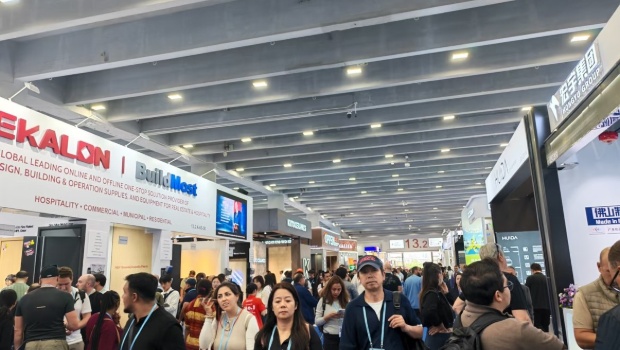
"Is It Worth the Flight?" — The Real Cost and
A round-trip flight to Guangzhou, a week in a hotel, meals, ground transport, and visa fees — it all adds up. For first-time buyers especially, the question is legitimate: is the Canton Fair actually worth the investment, or can you get the same results from your laptop?
Here's the honest answer, broken down in numbers.
The True Cost of Attending One Phase
|
Expense |
Budget Estimate |
Notes |
|
Round-trip flight |
$600–1,500 |
Varies by origin. Book 8–12 weeks early for best rates. |
|
Hotel (5–6 nights) |
$600–1,500 |
Pazhou area during fair weeks. Budget hotels ~$100/night; business hotels ~$200–250/night. |
|
Meals & daily expenses |
$200–400 |
Guangzhou is affordable. Street food and local restaurants: $8–15/meal. |
|
Local transport |
$50–100 |
Metro + occasional taxi. A weekly metro pass costs under $15. |
|
Visa fees |
$0–180 |
Free if your country qualifies for visa-free entry. M Visa: $140–180 depending on consulate. |
|
Business cards, samples shipping |
$50–150 |
Printing in Guangzhou is cheap. Budget for shipping samples home. |
|
Total (one phase) |
$1,500–3,800 |
Mid-range realistic budget: ~$2,500 for a 6-day trip. |
If you attend two phases with a changeover break in between (roughly 12–14 days total), expect to spend $3,000–5,500.
The ROI That Justifies the Trip
The cost of attending is concrete. The return is where most analysis falls apart, because it's harder to quantify. So let's try.
Scenario A: Better supplier. Current cost $4.20/unit × 20,000 units/year. Canton Fair source factory offers $3.60 at equivalent quality. Annual savings: $12,000 — a 4–5× return on a $2,500 trip.
Scenario B: Avoid a bad supplier. First orders with unverified online suppliers carry a 15–25% chance of significant quality issues. On a $30,000 order, quality failure costs $5,000–15,000 in direct losses. Face-to-face meetings and physical sample inspection cut this risk dramatically.
Scenario C: Faster timeline. Online sourcing from first contact to production order takes 8–14 weeks. At Canton Fair, you compress discovery, samples, and negotiation into one week — critical for seasonal products where timing decides market position.
The Hidden Cost of NOT Attending
Buyers who source exclusively online pay an invisible tax: extra sample rounds ($100–300 each, 2–3 weeks per round), higher defect rates with unvetted suppliers, weaker negotiation positions, and margin erosion from trading companies instead of source factories. Over 12 months, these hidden costs typically exceed $5,000–15,000.
Bottom line: If your annual China sourcing spend exceeds $30,000, the Canton Fair pays for itself with one better supplier. Above $100,000, not attending is the more expensive decision.
What to Do After Canton Fair — The Follow-Up Playbook That 90% of Buyers Skip
The Canton Fair ends when your first production order ships — not when you leave the exhibition complex. The gap between those two events is where most sourcing relationships die.
The 48-Hour Rule
Within 48 hours of your last day at the fair, send a personalized WeChat message or email to your top 5–8 suppliers. Include: who you are, what you discussed, exact product specs for samples, expected sample timeline, and the next step (sample order, video call, or factory visit).
Don't send generic "nice to meet you" to 30 suppliers. Exhibitors meet hundreds of buyers daily — a prompt, specific follow-up signals you're serious and gets you priority sample slots.
Sample Evaluation
Request samples from at least 3 suppliers per product category. Side-by-side comparison reveals quality differences in material weight, finish, color accuracy, and packaging that are invisible when evaluating a single sample.
Set a hard deadline. "I need the sample by [date]. If not received, I'll proceed with other suppliers." A supplier who misses a sample deadline will miss production deadlines.
Evaluate beyond the product. Sample quality = factory capability. Delivery speed = project management. Packaging accuracy = attention to detail. Responsiveness = how they'll behave during production.
Supplier Verification: Don't Skip This Step
Before placing a production order exceeding $10,000, verify the supplier through at least one method:
Factory audit. Physical inspection covering production capacity, equipment, QMS, worker conditions, and certifications. Conducted by your team, a third-party firm (SGS, Bureau Veritas, TÜV), or a sourcing agent.
DUPRO (During Production Inspection). On-site check at 20–40% order completion. Catches defects early, giving you leverage to demand corrections before the full batch is finished.
FRI / PSI (Final Random Inspection). Standardized inspection (AQL 2.5 sampling) after production, before shipment. If defect rates exceed agreed tolerance, you can reject or demand rework.
Background check. Verify business license, export history, and financial stability via Qichacha / Tianyancha. Confirm the Canton Fair exhibitor is the same entity that will produce your order — trading companies sometimes exhibit under factory names.
The Sourcing Agent Advantage in Post-Fair Execution
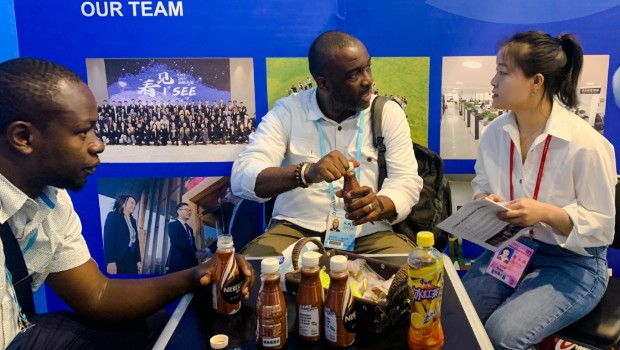
Once you're 12 time zones away with suppliers spread across Guangdong, you need someone on the ground to visit factories, verify production lines, manage sample logistics, negotiate in Mandarin, and supervise quality inspections at every milestone.
A sourcing agent conducts factory audits in person, sits on the production floor during DUPRO, catches defects before shipment, and provides photographic evidence at every stage. For first-timers, it means expert guidance through Chinese manufacturing protocols. For experienced importers, it's a dedicated execution team without the overhead of a local office. Discuss your post-Canton Fair verification plan with our team.
Building a Long-Term Supplier Relationship
Place a structured first order. Start with a mid-size order ($3,000–10,000) to test the factory's real workflow while limiting risk.
Establish communication rhythms. Weekly check-ins during production. Agree upfront on milestones that trigger photo/video updates (material procurement, production start, mid-point, pre-shipment).
Plan order #2 before #1 ships. Signaling long-term intent gets you better pricing and moves you up the factory's priority list during peak season.
Revisit the Canton Fair. Attend annually to benchmark existing suppliers, discover innovations, and expand your factory network. Each visit compounds your market knowledge.
If you decide to attend the Canton Fair. Learn the full follow-up workflow in our guide What to Do After Canton Fair.
Frequently Asked Questions About Canton Fair 2026
When is the Canton Fair 2026?
Spring session (139th): April 15–May 5, in three phases — Phase 1 (April 15–19), Phase 2 (April 23–27), Phase 3 (May 1–5). Autumn session (140th): October 15–November 4, same structure. Hours: 9:30 AM–6:00 PM (GMT+8).
Is the Canton Fair free for buyers?
Yes. Registration and attendance are completely free. Register through the BEST system, receive a QR code, and collect your Buyer Badge at the venue.
Do I need a visa to attend?
Citizens of ~50 countries (most EU nations, UK, Canada, Australia, Japan, South Korea) can enter China visa-free for up to 30 days through December 31, 2026. Others (including US citizens) need a China M Visa, typically 4–7 business days to process.
Which phase should I attend?
Phase 1: electronics, machinery, hardware.
Phase 2: home goods, gifts, furniture, building materials.
Phase 3: textiles, fashion, toys, food.
If unsure, Phase 2 offers the broadest product variety for first-time buyers.
How do I find reliable suppliers?
Prepare a sourcing brief (specs, MOQ, certifications) before the fair. On the floor, ask: Are you the factory or a trading company? What's your defect rate? Can I visit your factory? After the fair, sample from 3+ suppliers per category and conduct a factory audit before ordering.
Is it worth attending as a first-time buyer?
Yes — if your annual China sourcing spend exceeds or will reach $30,000. A one-phase trip costs $1,500–3,800. One better supplier can save $10,000+ annually.
Ready to make the 139th Canton Fair your most productive sourcing trip?
Book a free sourcing consultation → Pre-fair supplier screening, exhibition floor support, and post-fair factory verification.
Download the Canton Fair 2026 Buyers' Guide (PDF) → Registration, visa, hotel, packing, and your first 48 hours in Guangzhou.
Canton Fair Resource Hub for Buyers:
-
How to Attend the 139th Canton Fair 2026: A Complete Guide for Importers
-
How to Prepare for the 139th Canton Fair 2026? The Buyer Checklist
-
Best Sourcing Platform in China: Canton Fair vs Yiwu Market vs Alibaba
-
What to Do After Canton Fair — The Playbook That 90% of Buyers Skip
- Canton Fair Checklist 2026: Don’t Go Before Watching This
