Global e-commerce keeps growing, but the structure behind it is quietly shifting. In 2023, China's cross-border online imports and exports grew by more than 15 percent, reaching roughly US $331 billion. More products are moving closer to end customers, and more businesses are reconsidering how they sell.
Even so, many importers and wholesalers still rely almost entirely on marketplaces like Amazon, MercadoLibre, or traditional distributors to move products sourced from China. These channels offer reach and volume, but they also create clear limits. Margins continue to shrink, platform rules reduce flexibility, customer data stays outside the business, and the buying experience is largely out of the seller's control.
Over time, this raises a practical concern. If sourcing and operations are strong, why does growth still feel constrained? And more importantly, how can importers and wholesalers start selling directly to consumers without disrupting what already works?
In this article, we explore how businesses can add a direct-to-consumer channel alongside their existing sourcing and wholesale operations. We break down what it takes to move from sourcing products to selling online in a way that is structured, manageable, and built for long-term growth.
Let's dive in.

What Is Product Sourcing and How It Works for Online Selling?
Product sourcing is the foundation of any product-based business. At its core, it is the process of deciding what to sell, who will produce it, and how it can be delivered at the right cost and quality. For importers and wholesalers, this process is already familiar. However, when products are sold online, sourcing decisions carry additional weight.
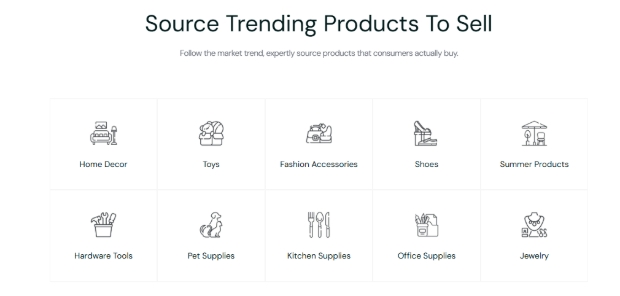
The first step is identifying products to sell. This often starts with existing best sellers, proven demand in certain categories, or products that solve clear customer problems. From there, businesses move on to finding and evaluating suppliers, looking closely at reliability, production capacity, and consistency. Finally, sourcing requires ongoing management of cost, quality, and scalability, especially as demand changes or new markets are added.
When sourcing supports online selling, these steps must work together. A product that is easy to source but hard to price competitively online, or difficult to package and ship efficiently, can quickly limit growth.
Common Product Sourcing Models
How sourcing is managed depends largely on the model a business chooses. The most common models include:
-
Manufacturers: Working directly with factories offers the highest level of control over product specifications, pricing, and production. This model works well for businesses with stable demand and clear product requirements, but it often requires higher minimum order quantities and longer lead times.
-
Trading companies: Trading companies act as intermediaries between buyers and factories. They provide more flexibility in product selection and order size, which can be useful for testing new products or managing a diverse catalog. However, control over pricing, quality, and long-term scalability may be more limited.
-
Procurement partners: Procurement partners take a broader role in the sourcing process. Instead of focusing on individual transactions, they support supplier selection, quality control, pricing strategy, logistics coordination, and long-term supply-chain planning. This model is often better suited for businesses sourcing at scale or preparing for direct-to-consumer expansion.
Each model serves a different purpose. The right choice depends on how much control, flexibility, and long-term stability the business needs.
Product Sourcing vs Online Sales Readiness
Strong product sourcing is a solid starting point, but it does not automatically mean a business is ready to sell online. Wholesale sourcing and direct-to-consumer selling operate with different priorities. What works well for bulk distribution often needs to be adjusted for online buyers.
The table below highlights how these priorities shift when moving from wholesale sourcing to online sales readiness.
|
Category
|
Sourcing Focus (Wholesale)
|
Sales Focus (Direct-to-Consumer)
|
|
Pricing Strategy
|
Focuses on bulk volume and low unit costs.
|
Must include shipping, marketing, returns, and platform costs while protecting margins.
|
|
Product Packaging
|
Designed mainly to protect goods during bulk transport.
|
Designed to support branding and create a positive unboxing experience.
|
|
Logistics & Fulfillment
|
Built around freight shipments and warehouse delivery.
|
Requires fast, individual parcel delivery with tracking and last-mile coordination.
|
|
Quality Standards
|
Focuses on meeting technical specifications and factory requirements.
|
Focuses on consistency, customer satisfaction, and avoiding negative reviews.
|
|
Customer Data
|
Little to no direct interaction with the end customer.
|
Relies on capturing customer data to support retention and repeat purchases.
|
This comparison shows why strong sourcing alone is not enough. To succeed online, businesses must align their sourcing capabilities with the expectations and behaviors of direct consumers.
How to Source Products to Sell Online (For Importers & Wholesalers)

For importers and wholesalers, sourcing products is not new. What changes when moving into online sales is how sourcing decisions affect margins, operations, and customer experience. Products that work well in wholesale do not automatically translate into online success unless sourcing is adjusted with retail realities in mind.
The following steps outline how to source products specifically for online selling, while building on existing wholesale strengths.
Identifying Products with Online Demand
The first decision is not where to source, but what to source. Online demand behaves differently from wholesale demand, so validation is essential.
Strong signals of online demand usually come from a combination of:
-
Marketplace sales data from platforms like Amazon or MercadoLibre, which show real consumer buying behavior, pricing tolerance, and popular product variations.
-
Existing B2B best-selling SKUs that already prove product-market fit, supply stability, and repeat demand.
-
Clear consumer use cases, where the product solves a specific problem, fits a daily routine, or offers a clear improvement over alternatives.
Products that combine marketplace validation, internal sales history, and strong consumer relevance are far easier to position and scale online.
Selecting the Right Sourcing Model
Once products are selected, the next step is choosing a sourcing model that supports both online sales and long-term growth.
Common sourcing models include:
-
Direct factory sourcing, which offers strong control over specifications, pricing, and production. This works best for stable products with predictable demand, but often requires higher MOQs and longer lead times.
-
Trading companies, which offer short-term flexibility, smaller order sizes, and easier product assortment changes. This can be useful for testing or early-stage online launches, though long-term control may be limited.
-
Procurement partners, which operate across supplier selection, pricing structure, quality standards, and logistics coordination. This model is better suited for businesses planning to scale online sales while reducing operational risk.
The right sourcing model should match not only current order volumes, but also how quickly the business expects online demand to evolve.
Supplier Evaluation and Risk Management
Online selling increases visibility and customer expectations. As a result, supplier issues become customer-facing problems much faster.
Supplier evaluation should focus on:
-
Sampling and quality checks that reflect real production standards, not special sample runs.
-
Production capacity and consistency, ensuring suppliers can handle repeat orders and demand fluctuations without quality drops.
-
Compliance and certifications required for target markets, especially for consumer-facing products.
Strong supplier management reduces the risk of delays, returns, and negative reviews once products are live.
Pricing, MOQ, and Lead Time Planning
Wholesale pricing logic rarely works unchanged in online sales. Planning must account for additional costs and faster inventory cycles.
Key considerations include:
-
Margin requirements for online sales, covering marketing spend, shipping, returns, and platform costs while still protecting profitability.
-
MOQ planning that supports smaller, more frequent orders instead of large bulk commitments.
-
Lead time reliability, which directly affects stock availability and customer trust.
Poor alignment between pricing, MOQ, and lead times is one of the most common reasons online launches struggle to scale.
Quality Control and Logistics Setup
When selling online, quality control and logistics move from a back-office function to a direct growth driver. Every defect, delay, or unexpected cost shows up quickly through returns, negative reviews, and margin erosion. For importers and wholesalers expanding into D2C, this stage often determines whether online sales remain profitable as volume increases.
The first priority is pre-shipment inspection. Online buyers expect consistency. Even minor quality issues that might be acceptable in wholesale can lead to complaints or refunds in direct sales. Inspections before goods leave the factory help confirm:
-
Product appearance and functionality match approved samples
-
Packaging is suitable for individual shipping, not just bulk transport
-
Labels, barcodes, and compliance markings are correct
Catching issues at this point is far less expensive than dealing with returns or platform penalties later.
Logistics planning is equally critical. Unlike wholesale shipments that move in large batches to warehouses, online sales rely on smaller, more frequent shipments that must balance speed and cost. Poor logistics planning can quietly destroy margins, especially when volumes are still growing and order patterns are unpredictable.
That why cost optimization becomes a strategic concern, not just an operational one. Many importers sourcing from China face a common problem in early-stage online expansion: products come from multiple factories, but volumes from each supplier are not yet large enough to fill full containers efficiently. Shipping partial containers or separate shipments drives up per-unit costs and reduces pricing flexibility.
To address this, experienced procurement partners often use consolidation services, where products from multiple suppliers are combined into mixed containers before shipment. This approach allows businesses to:
-
Reduce wasted container space
-
Lower per-unit shipping costs
-
Maintain flexibility when sourcing from different factories
-
Improve cash flow by avoiding oversized inventory commitments
Pro tip: This is a key area where EJET Procurement adds value. EJET supports quality control and logistics setup by coordinating inspections across suppliers and providing consolidation services that allow mixed containers to be shipped efficiently. By managing this process centrally, EJET helps importers sourcing from China control logistics costs while keeping product quality consistent across different factories.
As online sales scale, this combination of structured quality control and optimized logistics becomes a competitive advantage. It protects margins, improves delivery reliability, and creates a supply-chain foundation that can support long-term direct-to-consumer growth.
The Limits of Sourcing Products Without an Online Sales Channel
Strong sourcing can build a stable wholesale business, but on its own, it creates clear limits. When products are sold only through distributors or marketplaces, growth is shaped more by external rules than by internal capability. Over time, these constraints become harder to ignore.
Margin Caps from Wholesale Pricing
Wholesale pricing is designed for volume, not flexibility. While it supports predictable orders, it also sets a hard ceiling on profitability.
Common limitations include:
-
Fixed pricing structures that leave little room to adjust margins once costs rise.
-
Limited upsell and bundling opportunities, since product presentation and offers are controlled by distributors or platforms.
As costs increase across sourcing, logistics, or marketing, businesses often have no direct way to recover margin without renegotiating contracts or accepting lower profitability.
No Control Over Customer Experience
When selling through third parties, the customer experience is no longer owned by the business that sources the product.
This typically means:
-
Product presentation is handled by platforms or distributors, with limited influence over visuals, messaging, or positioning.
-
No ability to optimize the buyer journey, including how products are discovered, compared, or purchased.
Even high-quality products can underperform when the buying experience does not reflect their value.
Lack of Customer Data Ownership
Wholesale and marketplace models keep businesses far from the end customer. While products move, relationships do not.
This results in:
-
No first-party customer data, such as email addresses, preferences, or purchase history.
-
No remarketing or retention strategy, making repeat sales dependent on external platforms rather than direct relationships.
Without customer data, long-term growth becomes transactional instead of cumulative.
Growth Tied to External Platforms
Finally, businesses that rely entirely on third-party channels remain exposed to decisions they cannot control.
Key risks include:
-
Platform policy changes that affect visibility, fees, or account stability.
-
Increased competition and fee pressure, which steadily erode margins over time.
Even well-run sourcing operations can stall when growth depends on systems designed to prioritize platform interests over seller sustainability.
Why Importers & Wholesalers Are Moving Beyond a B2B-Only Model
As the limits of wholesale-only selling become more visible, many importers and wholesalers are not abandoning B2B channels. Instead, they are adding a direct-to-consumer layer to regain flexibility, protect margins, and build longer-term value. This shift is driven by a few clear advantages.
Margin Expansion Through Direct Sales
Direct sales unlock pricing structures that are not possible in wholesale environments. Rather than working within fixed margins, businesses can design offers that reflect the full value of their products.
Key benefits include:
Even modest direct sales volumes can significantly improve overall profitability when margins are no longer capped by wholesale agreements.
Channel and Pricing Control
Selling directly gives businesses control over when and how products are promoted. This flexibility becomes especially important in competitive or seasonal markets.
Direct channels allow for:
-
Independent promotions without waiting for distributor approval or platform incentives.
-
Flexible pricing strategies, including testing price points, limited offers, and regional adjustments.
With control over pricing and promotions, businesses can respond faster to market conditions instead of reacting to external decisions.
Direct Customer Relationships
One of the most important shifts in moving beyond B2B is access to the end customer. Direct sales turn one-time transactions into ongoing relationships.
This enables:
-
Email lists and customer insights that reveal buying behavior, preferences, and repeat purchase patterns.
-
Long-term customer value through retention, repeat orders, and cross-selling.
Over time, customer relationships compound in value, while wholesale transactions reset with each order.
Brand Building and Differentiation
Finally, direct channels give businesses a platform to tell their own story. Instead of competing only on price or availability, importers and wholesalers can define how their products are perceived.
This includes:
-
Control over messaging and positioning, from product descriptions to brand values.
-
Stronger long-term business assets, such as brand recognition, audience trust, and owned traffic.
In the long run, these assets often matter as much as sourcing efficiency. They create stability and differentiation that wholesale channels alone cannot provide.
How to Build a Profitable Shopify Store for Your Wholesale Business
For importers and wholesalers, the decision to add a Shopify store usually comes after a period of pressure rather than ambition. Wholesale margins become harder to protect, marketplace rules limit pricing freedom, and growth increasingly depends on systems that sit outside the business. Over time, these constraints push many companies to look for a direct channel that restores control without disrupting existing sourcing and distribution operations.
Why Shopify Works for Wholesale-to-D2C Expansion
Shopify gives businesses direct control without forcing major operational changes. This balance is especially important for importers and wholesalers managing complex supply chains.
Key reasons Shopify works well include:
-
Full ownership of the store and customer data, allowing businesses to collect first-party data and reduce reliance on external platforms.
-
Flexible product and pricing management, making it easier to test retail pricing, bundles, and promotions without affecting wholesale agreements.
-
A strong app and integration ecosystem, supporting payments, logistics, analytics, and marketing as online sales grow.
This structure allows businesses to experiment with direct sales while protecting their core sourcing and wholesale operations.
What Makes a Wholesale Shopify Store Profitable
Profitability in a wholesale-to-D2C Shopify store depends less on traffic volume and more on conversion efficiency and trust.
Three factors consistently make the difference:
-
A clear value proposition: Visitors need to understand why buying direct makes sense. This may come from better pricing, product quality, or transparency around sourcing and quality control.
-
Trust signals that reduce hesitation: Reviews, guarantees, and clear explanations of how products are sourced and handled help customers feel confident purchasing from a supplier they may not recognize as a consumer brand.
-
Consumer-first UX and mobile optimization: Wholesale buyers tolerate complexity. Online consumers do not. Navigation, product pages, and checkout flows must be simple, fast, and designed for mobile use.
When these elements are missing, even competitively priced products struggle to convert.
Building Conversion-Focused Pages with GemPages
For many wholesale businesses, the real obstacle in direct-to-consumer selling does not sit in sourcing or cost control. Products are often well made, suppliers are reliable, and unit economics are already optimized. The problem appears later, when those strengths are introduced to end customers through a storefront that does not explain value clearly or guide buyers toward a confident decision.
This gap between strong sourcing and weak presentation is where most wholesale-led D2C efforts lose momentum.
GemPages Landing Page Builder for Shopify addresses this execution gap by giving businesses full control over how their products are communicated, structured, and optimized for conversion. Instead of relying on rigid theme templates, teams can design pages that reflect how consumers actually evaluate products, focusing on clarity, reassurance, and ease of purchase.
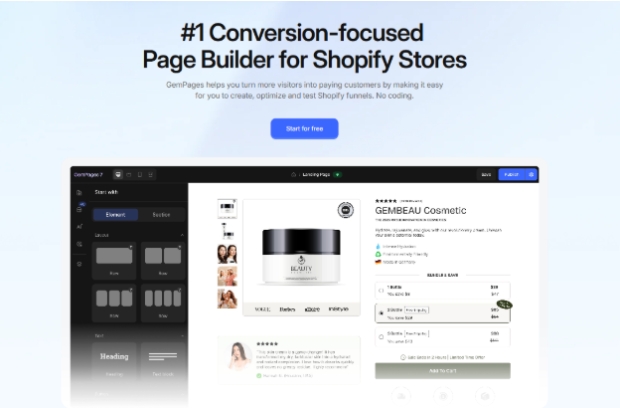
With GemPages, wholesale teams can:
-
Build product pages designed specifically for B2C buyers, where benefits are explained clearly, objections are addressed early, and purchasing confidence is reinforced through structure rather than copy alone.
-
Launch campaign and landing pages for bundles, seasonal offers, or product tests without waiting on developers or touching core theme code.
-
Adjust layouts, messaging, and offers quickly using drag-and-drop editing, making it easier to test what resonates as consumer demand evolves.
-
Improve profitability through conversion optimization and post-purchase upsells, increasing average order value without relying on higher traffic spend.
For importers and wholesalers sourcing from China, this upstream role is often handled by procurement partners like EJET Procurement. EJET supports supplier vetting, quality control, and logistics coordination, helping businesses maintain consistent product standards across factories. They provide services such as inspection management and shipment consolidation, including mixed-container solutions, reduce cost volatility and improve delivery predictability as online order volumes grow.
When these sourcing and logistics foundations are in place, GemPages can operate at full strength. Product pages can confidently highlight quality standards, packaging details, and delivery expectations because those elements are already controlled upstream. Bundles and upsells built in GemPages remain profitable because shipping costs are optimized through consolidation rather than inflated by fragmented supplier shipments.
Together, they allow importers and wholesalers to scale direct sales with fewer surprises, stronger margins, and a storefront that accurately reflects the strength of the supply chain behind it.
Conclusion
For many importers and wholesalers, adding a direct sales channel happens gradually. It often begins with a few tested products, small adjustments in how they are presented, and closer attention to how customers respond.
When sourcing remains stable and the online experience is built with real buying behavior in mind, selling direct can grow alongside existing channels without friction. Over time, this approach gives businesses more flexibility and visibility, while keeping their core operations intact.
FAQs
Can importers and wholesalers sell D2C without stopping wholesale or marketplace sales?
Yes. Many businesses run wholesale, marketplace, and D2C channels in parallel. Shopify allows direct sales to be tested and scaled without interfering with existing sourcing or distribution agreements.
What is the biggest challenge when wholesalers move into D2C?
In most cases, the challenge is execution rather than sourcing. Products and costs are often well managed, but storefronts fail to communicate value clearly or guide customers toward purchase.
Why is storefront execution so important for wholesale-led D2C?
Online buyers make decisions quickly and expect clarity, trust, and ease of use. Without a conversion-focused storefront, even competitively priced products struggle to perform.
How does GemPages help wholesale businesses sell directly to consumers?
GemPages allows teams to build and optimize product pages, campaign pages, and upsell flows without developer dependency. This makes it easier to test offers, improve conversion rates, and increase order value.
Is D2C suitable for all importers and wholesalers?
D2C works best for businesses with stable sourcing, consistent quality, and products that solve clear customer needs. It is often used as a complementary channel rather than a full replacement for wholesale sales.
Note: This article does not include a real-world case study. If you have a relevant example or implementation story, please share it with us. GemPages is happy to review and include it in a future update.
 Business Growth