

Yiwu Market District 4 is a one-stop destination for sourcing homeware and daily necessities. It offers a unique scale, diversity, and efficiency. For international buyers seeking competitive pricing, flexible MOQs, and fast product turnover, District 4 has become a strategic sourcing hub.
The scale and variety create strong sourcing opportunities and also create complexity. Without a clear strategy, buyers often struggle with identifying reliable suppliers, negotiating realistic MOQs, controlling quality, and consolidating orders efficiently.
This guide provides a structured, step-by-step approach to sourcing from District 4. We help you reduce risk, control costs, and build a more stable China sourcing supply chain.
Overview of Yiwu Market District 4
With 16,000+ suppliers over 1.08 million m², District 4 is one of the core sections of the Yiwu International Trade City.
It is specifically known for its concentration of homeware and household daily-use products. Compared with other districts that focus on toys, hardware, or office supplies, this one is structured around practical consumer goods with stable global demand.
Most suppliers in District 4 operate as export-oriented businesses. Some are factory-backed, while others are experienced trading companies that integrate products from multiple factories. This mixed supplier structure provides flexibility but requires careful evaluation.
Overall, Yiwu Market District 4 is a cornerstone of the global homeware trade. It functions as a centralized trading platform rather than a manufacturing zone. Its infrastructure supports high-volume international trade, including logistics coordination, order consolidation, and export documentation processes.
Popular Homeware Products in Yiwu Market District 4: What it Main Sells?
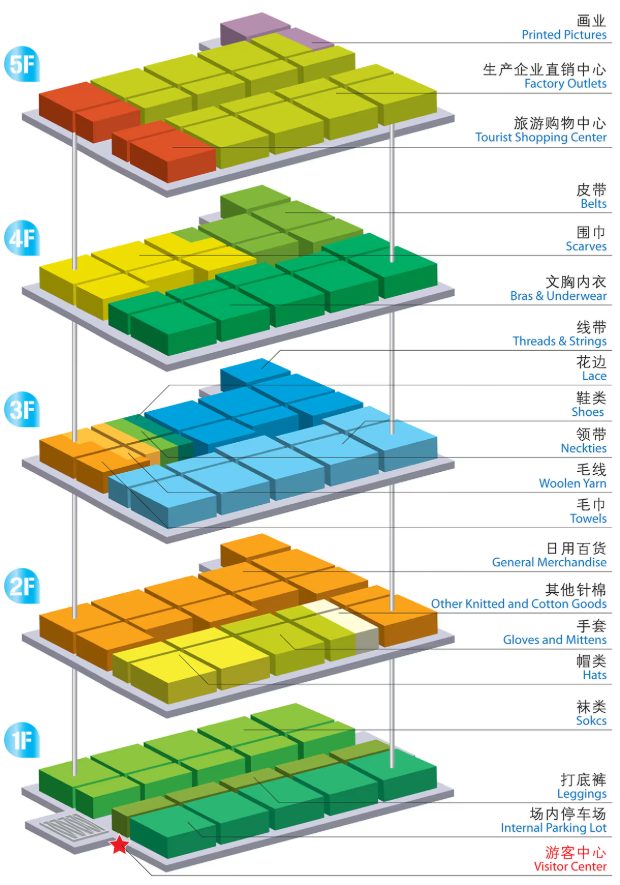
District 4 is often referred to as the Homeware & Lifestyle Pavilion. The building integrates textile-based home products, daily necessities, and lifestyle goods within one centralized sourcing hub. Below is a structured breakdown by floor.
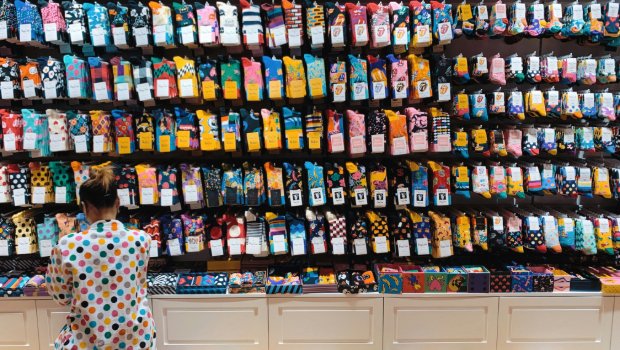
1F: The Sock Specialization Zone
The first floor is primarily dedicated to socks and leggings, making it one of the most concentrated sock trading areas in China. Main products include:
-
Men’s, women’s, and children’s socks
-
Sports socks
-
Compression socks
-
Fashion and seasonal socks
-
Leggings
Buyers targeting e-commerce sellers, supermarkets, apparel chains, and discount retail stores frequently source from this floor.
2F: Daily Consumables & Knitwear Essentials
The second floor focuses on practical textile goods and accessories. Main categories:
-
Hats and gloves
-
Knitted and cotton products
-
Everyday textile consumables
-
Basic home textile accessories
This level is suitable for buyers seeking seasonal replenishment products or bundled textile SKUs.
3F: Textile Accessories & Light Apparel Components
The third floor is structured around textile materials and related lifestyle components. Key products include:
-
Sewing threads and strings
-
Laces and decorative trims
-
Towels and Woolen Yarn
-
Neckties
-
Casual shoes and light footwear
This floor serves not only finished product buyers but also small manufacturers and private label brands looking for material sourcing.
4F: Fashion Accessories & Intimate Apparel
The fourth floor combines lifestyle textiles with wearable home-related products. Main offerings:
-
Belts and scarves
-
Bras and underwear
-
Soft fashion accessories
For buyers combining home textiles with light apparel or fashion accessories, this floor allows cross-category sourcing within one building.
5F: Tourism, Shopping & Daily Necessities Center
The fifth floor functions as a mixed commercial zone. It includes:
-
Factory outlets
-
Tourist shopping center
-
Printed Pictures
This area is often used for product discovery and supplementary SKU expansion rather than bulk-focused procurement.
What is the Best Market in Yiwu to Source Products from: District 1–6 Comparison
The Yiwu International Trade City is divided into multiple districts, each specializing in different product categories. There is no single “best” district. There is only one that best matches your product strategy, order volume, and business model.
|
District |
Core Category |
MOQ Flexibility |
SKU Variety |
Best For |
|
Toys & Gifts |
High |
Very High |
Seasonal & gift importers |
|
|
Hardware & Tools |
Medium |
Medium |
Industrial buyers |
|
|
Office Supplies |
Medium |
High |
Stationery & school suppliers |
|
|
District 4 |
Homeware & Textiles |
High |
Very High |
Retail & e-commerce |
|
District 5 |
Imported Goods |
Varies |
Medium |
Cross-border trade |
|
Industrial / Specialized |
Lower |
Medium |
Factory-based sourcing |
How to Source from Homeware Products Yiwu Market District 4
Sourcing from Yiwu Market District 6 has significant advantages, but it's not as simple as it seems. When concentrating on suppliers with different capabilities, buyers must systematically manage planning, selection, negotiation, and quality control.
Step1: Define Requirements and Plan Route
Identifying your precise requirements is essential in sourcing homeware from Yiwu Market District 4. Start by detailing the types of products you need, at least including:
-
Product category (e.g., socks, towels, knitwear, daily textile goods)
-
Target price range (FOB expectation)
-
Material requirements (cotton %, polyester blend, GSM for towels, etc.)
-
Compliance standards (e.g., textile safety like GOTS and CPSC)
Once defined, strategize your route through the market. Familiarize yourself with the layout of District 4 to pinpoint where relevant products are located. Having a clear picture of the structure will help you move quickly and effectively between vendor stalls.
Step2: Find Verified Suppliers
Not all booths in Yiwu Market District 4 are real factories. Many are trading intermediaries or small resellers.
Sourcing from unverified suppliers can lead to quality issues, delayed shipments, or inflated pricing. To minimize risk, buyers should take a systematic approach to supplier verification before committing to orders.
Start with Official Market Resources
A good starting point is the official Yiwu Market resources. The Yiwugo provides a detailed supplier directory by product category, business type, and contact information. Downloading supplier profiles and checking business licenses allows buyers to create an initial pool of credible contacts and plan an efficient route for floor visits.
Cross-Verify on Online B2B Platforms
After identifying potential suppliers through official channels, it is wise to cross-verify their credentials on online B2B platforms such as Alibaba or Made-in-China.
Buyers should examine whether the supplier’s business license is verified, how long they have been operating, their export experience, and reviews or ratings from other international buyers.
Consistency across multiple platforms often indicates legitimacy, while discrepancies may signal trading intermediaries misrepresenting factory capabilities.
Use Third-Party Verification Services
For buyers unable to conduct in-person inspections, third-party verification services offer additional assurance. Platforms like SGS or local sourcing agents can verify a factory’s existence, production capacity, compliance with export standards, and historical performance.
This is particularly important for textile-based homeware products, where material quality and color consistency between batches directly affect retail outcomes.
Evaluate Critical Supplier Factors
During the evaluation process, buyers should focus on several critical factors. Using a form can help you systematically evaluate each potential supplier and facilitate comparisons, whether on-site or remotely.
|
Factor |
What to Check |
Textile / Homeware Notes |
|
Business Type |
Factory-backed or trading company |
|
|
MOQ per Design / Color |
Realistic minimum order quantity |
Small retailers may prefer suppliers with flexible MOQ for socks, towels, or bedding SKUs. |
|
Private Label & Packaging |
Ability to customize branding |
Check polybag type, carton labeling, and header card designs. |
|
Production Lead Time |
Sample vs bulk production |
(typical for textile homeware) |
|
Export Experience |
Past shipments to your target market |
Verify if they have experience exporting to US/EU/Latam Check compliance with labeling, fiber content, and safety standards. |
|
Material Composition |
Fabric %, yarn type, GSM (grams per square meter) |
Ensure consistency in cotton, polyester blends, or other textile standards. |
|
Fabric Test Reports |
Availability of lab or in-house testing certificates |
Helps guarantee colorfastness, shrinkage, and tensile strength meet market requirements. |
|
Color Consistency |
Methods for batch-to-batch control |
Especially important for socks, towels, or knitwear sold in multiple colors. |
Tip: Fill out a form for each supplier and make a horizontal comparison by rating to facilitate the final one.
Finally, shortlist 2–3 reliable suppliers per SKU. Document their contact details, quotations, and capabilities, and plan a structured District 4 route to maximize efficiency.
Step3: Negotiate and Confirm Order
Negotiating with suppliers can ensure profitable and reliable homeware sourcing. Approaching negotiations professionally ensures that both parties understand expectations and reduces future disputes.
Prepare Before Negotiation
Before starting discussions, gather all essential information about the product and supplier. Having these details ready allows you to negotiate confidently and avoid vague agreements. This includes MOQ, target pricing, material specifications, previous quotations, and delivery expectations. For textile homeware, note specific requirements such as fabric composition, GSM, color consistency, and labeling standards.
Discuss Pricing and Terms
When negotiating pricing, focus on total landed cost rather than unit price alone. Include considerations such as packaging, shipping, and potential rework. Discuss:
-
Unit price and total quantity per design/color
-
MOQ flexibility and trial order options
-
Discounts for bulk orders or repeat business
-
Payment terms (commonly 30% deposit, 70% balance before shipment)
-
Production timeline
Professional negotiation may also cover added services, like folding, labeling, or polybag customization, which can save time during consolidation.
Tip: Document everything in writing. This written record protects both parties and serves as the reference during production and inspection.
Step4: Manege Production & Quality Control
Quality control is critical when sourcing homeware products from Yiwu Market District 4. Textiles and daily-use items are prone to variation in material, color, stitching, and packaging. Implementing staged inspections ensures that the final shipment meets your specifications and export standards, especially CE, ASTM, or local textile labeling standards.
Here's how to manage production efficiently:
-
Set clear production timelines and expectations.
-
Communicate frequently to check progress.
-
Schedule quality inspections at different stages.
-
Develop a feedback loop for any issues found.
-
Establish a quality control checklist.
Step5: Consolidation & Shipping
After production and quality control, the next step is consolidating goods and preparing for shipment. Most buyers in Yiwu Market District 4 source from multiple suppliers. Without proper consolidation, shipments from different suppliers may be sent separately, which can:
-
Increase freight costs: Multiple small shipments are more expensive than a single bulk shipment.
-
Complicated customs clearance: Different invoices, labels, and packing lists create more administrative work.
-
Raise the risk of missing or damaged items: Managing multiple shipments increases the chance of errors or loss.
-
Slow down order fulfillment: Products arriving at different times delay overall delivery to your customers.
Consolidation ensures that goods from multiple suppliers are collected in one warehouse, checked for completeness and quality, and shipped together. This improves efficiency, reduces costs, and protects profit margins.
Once consolidated, prepare combined shipping documentation including packing lists, invoices, and any required compliance certificates. Choose the shipping method based on urgency and cost.
Why You Need a China Sourcing Agent for Buying from Yiwu Market?
Navigating Yiwu Market can be challenging, particularly if you're unfamiliar with the local business environment. This is where a China sourcing agent becomes invaluable. These professionals facilitate your buying process, ensuring efficiency and quality.
Based on our experience working with over 1500 sourcing customers, we've identified these as the issues they need us to help with.
-
Supplier verification: Distinguishing between reliable factories and trading intermediaries can be difficult.
-
Quality control: Ensuring consistent material, color, stitching, and packaging across multiple suppliers requires staged inspections.
-
Language and communication barriers: Negotiating terms, understanding compliance requirements, and clarifying production details can be time-consuming.
-
Logistics and consolidation: Managing multiple shipments, warehouse consolidation, and customs documentation is complex.
A professional sourcing agent bridges these gaps. They provide local expertise, verify suppliers, oversee production and inspections, and handle consolidation and shipping.
With a sourcing agent, buyers can reduce risk, save time, and maintain product quality, especially when managing multiple SKUs or sourcing remotely.

How to Choose a Reliable Yiwu Agent?
Selecting the right agent is critical to ensure a smooth sourcing experience. Consider this table:
|
Criteria |
What to Look For |
Why It Matters |
|
Proven Track Record |
Years operating in Yiwu, product categories handled, client portfolio |
Ensures experience with your product type (homeware, textiles, daily necessities) and ability to manage multiple SKUs effectively |
|
Transparent Process |
Clear explanation of sourcing workflow: supplier verification, staged inspections, order management, shipping; regular updates and documentation |
Guarantees accountability, reduces miscommunication, and keeps you informed throughout the sourcing process |
|
Local Presence and Network |
Local office/team in Yiwu; strong connections with factories and logistics providers |
Facilitates faster problem-solving, access to verified suppliers, and smoother logistics |
|
Professional Certifications or References |
Certifications in quality control, compliance, or supply chain management; client references or case studies |
Demonstrates credibility and proven ability to deliver successful sourcing projects |
|
Flexible Services |
Offers full-service sourcing or partial support tailored to buyer needs |
Allows you to choose the level of involvement that matches your business requirements and risk tolerance |
If you are sourcing multiple SKUs or without visiting, EJET Procurement can manage the full process to save time, reduce risk, and ensure consistent product quality.
Conclusion
Yiwu Market District 4 is a strategic hub for sourcing homeware and daily-use products. Its large supplier base, product diversity, and flexible MOQs make it an attractive choice for retailers, wholesalers, and e-commerce sellers worldwide.
However, navigating the market efficiently requires structured planning, from defining requirements and evaluating suppliers to managing quality control and shipment consolidation.
Working with a reliable China sourcing agent can simplify the process, reduce risk, and save time, especially for buyers sourcing multiple SKUs or operating remotely. By following a step-by-step approach, you can build a stable, cost-effective, and high-quality supply chain from District 4, maximizing both efficiency and profitability.
FAQ
Is Yiwu the ultimate place for sourcing products from China?
Yiwu is ideal for small commodities, homeware, textiles, toys, and daily-use products, offering unmatched supplier diversity and flexible MOQs. Here is a comprehensive guide for the whole Yiwu International Trade City.
What is the best way to source products from China?
The most efficient approach is a structured sourcing process: define your requirements, evaluate suppliers carefully, conduct staged quality inspections, consolidate shipments, and manage shipping documentation.
Can I find good suppliers from Yiwu Market without going to Yiwu?
Yes. Many verified suppliers can be contacted through official Yiwu directories, Alibaba, or third-party sourcing platforms. Hiring a professional sourcing agent enables remote buyers to manage supplier verification, quality control, and logistics effectively.
