
How to Source Private Label Kitchenware from China
By Samantha,
Dec 10, 2025
Recent industry data shows steady global growth in the kitchenware market. This demand pushes more brands to build private label kitchenware lines. The fastest and most effective way to do this is to source directly from China's OEM and ODM factories.
China has the most complete supply chain for private label kitchenware, covering cookware, gadgets, utensils, bakeware, and storage products. It supports fast development, stable quality, and competitive pricing.
This article explains how to source private label kitchenware from China, including key categories, supplier selection, production steps, and risk control.
Private label kitchenware refers to products where the brand owner decides the positioning, design, materials, and packaging. Chinese kitchenware manufacturers or OEM factories are responsible for production.
This model is ideal for companies that want to expand their product range but do not have the factory resources. It lets brands control the design, color, structure, function, and packaging. Also helps them cost-effectively build long-term brand assets.
White Label products are fully standardized items where buyers only add their logo or packaging. This model is ideal for fast market testing or low-differentiation products. White Label products are fully standardized items where buyers only add their logo or packaging. This model is ideal for fast market testing or low-differentiation products.
Private label kitchenware offers more customization. Brands can choose materials, shapes, colors, packaging, and structure design. It is suitable for companies that want a unique and differentiated product line.
For companies building the best private label kitchenware, this model helps create unique product collections at low development cost. It also supports faster growth in retail and e-commerce channels. After understanding the difference, brands can decide which products should be developed as private label items.
When evaluating whether a product fits the private label kitchenware model, brands should consider three main factors:
Food-contact safety certifications such as LFGB, FDA, and Prop 65
Material stability, including non-stick coating quality and 304/430 stainless steel grades
The OEM/ODM capability of the factory, including design support and production consistency
Products and suppliers that meet these standards can truly support brand differentiation, stable supply, and long-term growth.
China has the world's strongest manufacturing system. It covers stainless steel cookware, silicone tools, ceramics, plastics, glassware, knives, molds, and packaging.
Whether you are looking for China kitchenware OEM, custom kitchenware, a white label cookware manufacturer, or reliable kitchenware manufacturers, China offers unmatched advantages:
High percentage of OEM/ODM factories: Factories in China can help brands develop unique ideas from structure, materials, and functions.
Mature industrial clusters: These clusters create a complete and efficient supply chain.
Yangjiang — knives and cutlery
Chaozhou — ceramics
Yiwu International Trade City— kitchen gadgets
Shenzhen — molds and product development
Guangdong — silicone kitchenware
Suzhou — stainless steel cookware
Competitive pricing and stable production: Centralized material supply and experienced labor ensure long-term stable mass production.
Strong packaging and compliance capabilities: Factories support LFGB, FDA, ASTM, CE, and other international testing.
China's reliable private label kitchenware suppliers can provide food-grade materials, global testing support, and flexible production. This helps brands expand SKUs, enter new markets, or upgrade product collections. For most brands, China remains the only supply chain that can meet price, quality, speed, and scale at the same time.
China covers almost every mainstream private label kitchenware category and provides complete OEM/ODM solutions based on brand needs. The following categories are the most popular for international buyers:
A high-value category with strong brand potential. Custom options include aluminum grade, non-stick coating quality, handle style, logo process, and gift box design.
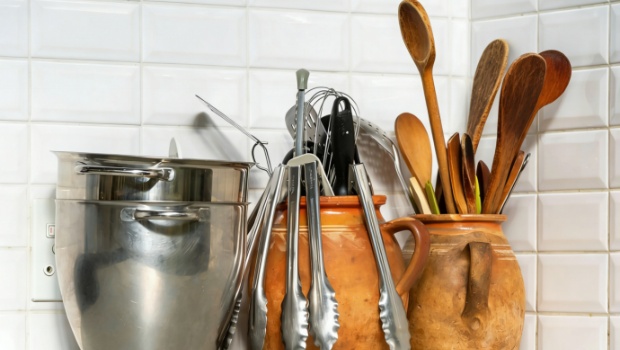
High demand in Europe and North America. Custom options include silicone formulas, metal thickness, temperature resistance, color systems, and packaging.
Rich SKUs and low unit cost. Ideal for kitchen tool kits. Factories offer color matching, material options, ergonomic handle design, mold development, and branding.
A mature OEM category in China with fast production. Common customization includes silicone hardness, food-grade materials, wood type, set composition, and packaging.
A fast-growing category driven by healthy eating and meal prep trends. Custom options include glass thickness, lid design, sealing ring material, color series, and set packaging.
Yangjiang provides full-process knife manufacturing. Custom options include steel type (3Cr13, 5Cr15, German Steel), blade finishing, handle materials, and premium gift boxes.
These categories are also the most searched in the private label kitchenware for sale segment.
Building a successful private label kitchenware business starts with a structured sourcing process. The following step-by-step guide outlines the proven sourcing workflow for private label kitchenware in China. To minimize risks and streamline collaboration with factories.
Define Your Private Label Requirements
Identify Supplier Types & Industrial Clusters
Supplier Verification & Evaluation
Sample Development & Testing
Negotiate Pricing, MOQ & Packaging
Place Order & Conduct Quality Control
Shipping & Logistics for Kitchenware
Before starting, brands should clearly define product type, materials, target customers, pricing, and sales channels. Clear requirements help factories make samples faster and reduce communication.
It is also important to plan branding elements. Decide on logo placement, packaging style, and color schemes. These details affect product quality and market appeal. Planning well at this stage saves time and cost later.
China has many mature industrial clusters for private label kitchenware. Knowing these clusters helps buyers find suppliers that focus on specific products.
For example, Yangjiang is known for knives, Chaozhou for ceramics, Yiwu for kitchen gadgets, Shenzhen for molds, Guangdong for silicone kitchenware, and Suzhou for stainless steel cookware.
Working with the right cluster ensures you deal with real manufacturers, not traders. This reduces quality risks and shortens production time.
A reliable supplier is essential for private label success. Check factories for production capacity, export experience, certifications (LFGB, FDA, CE), material sources, and coating suppliers.
Verification should include video audits, third-party inspections, or onsite visits. This confirms that suppliers can handle both samples and mass production.
EJET Procurement performs thorough checks. This helps brands avoid situations where samples are good but mass production is poor.
Samples are a critical part of private label projects. Factories should make prototypes that match your design, materials, and performance needs.
Samples pass tests for structure, appearance, coating durability, heat resistance, and food-contact safety. Testing samples early prevents problems like peeling coatings, warped handles, or inconsistent colors. Approving samples on time ensures stable quality in mass production and reduces returns.
Costs depend on materials, complexity, processes, and packaging. Negotiation should include minimum order quantity (MOQ), unit price, box design, and product sets.
Packaging affects safety during shipping and brand perception. Custom boxes, inserts, or eco-friendly materials can add value but may raise costs.
Before ordering, confirm all details: materials, size, tolerances, processes, packaging, testing standards, and lead time. QC should cover pre-production, in-production, and final inspections. This ensures consistency and compliance.
EJET Procurement's QC team checks samples, production status, and final goods, including color consistency, dimensions, coating adhesion, and knife sharpness.
Kitchenware is fragile and heavy. Proper shipping planning is essential. Reinforced packaging and careful loading are required for cookware, glass containers, and ceramics.
Shipping options include full-container load (FCL), less-than-container load (LCL), or consolidated shipping. Good logistics planning reduces cost, prevents damage, and ensures timely delivery.
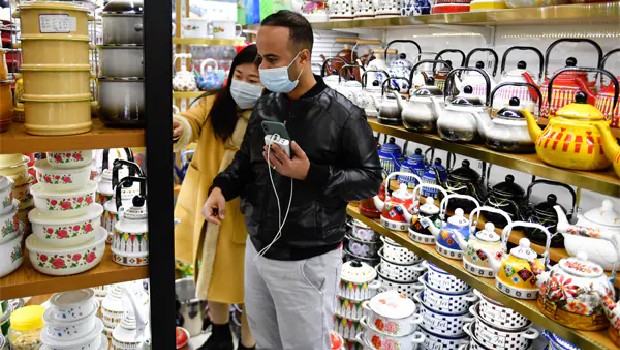
Common risks in private label kitchenware sourcing include color inconsistencies, size deviations, failed certifications, high MOQ, unstable lead times, and unclear pricing.
Solutions are straightforward. Brands can use standard samples, sign detailed contracts, confirm tests early, and monitor the supply chain with a reliable sourcing agent.
A professional China sourcing agent helps screen reliable private label kitchenware suppliers, verify kitchenware manufacturers, manage samples, compare quotations, and control quality.
EJET Procurement can also identify whether a supplier is OEM, ODM, or a White label cookware manufacturer. We integrate kitchenware and home décor categories to reduce communication and improve efficiency.
Additional strengths of EJET Procurement include:
1500+ supplier resources in major kitchenware clusters
Risk control, avoiding low-quality suppliers
Full project management from development to QC
15% Cost optimization through market comparison
For brands entering the market quickly, EJET Procurement is the most reliable partner for private label kitchenware sourcing.
Private label kitchenware is now a fast-growing home-goods category. China offers a mature industrial chain and strong OEM/ODM capability, providing unmatched sourcing advantages.
Whether you want reliable suppliers, new product lines, or upgraded packaging, China offers the most complete private label kitchenware ecosystem.
To source better factories, reduce cost, and manage development efficiently, you are welcome to contact EJET Procurement for one-on-one sourcing support.
Price depends on materials, complexity, tooling, certification needs, order quantity, and packaging. PP, silicone, stainless steel, aluminum, and ceramic products have different costs. Certifications like LFGB or FDA increase the price, so material and pricing strategy should be clear from the start.
Most factories accept flexible MOQ. This is especially true for mature OEM factories or suppliers working with a sourcing agent. Factories usually calculate MOQ by quantity.
You can source through factories, industrial clusters, or a sourcing agent. Wholesale markets are less suitable because many products are not built for private label. Supplier lists must still be verified for reliability.
Yes. Many brands develop kitchenware and wholesale home décor together to improve supply-chain stability and build a stronger lifestyle brand collection. EJET Procurement can integrate both categories for your multi-category expansion.
Your trusted partner for sourcing from china.
