

Sourcing from China to South Africa continues to be a practical and scalable strategy for importers, wholesalers, and retailers in 2026.
China offers unmatched manufacturing depth across consumer goods, toys, accessories, hardware tools, furniture, and light industrial products. South Africa provides steady demand through retail, e-commerce, construction, hospitality, and B2B distribution channels.
Today, pricing advantages are not the most important factor. Importers need control over the sourcing and import process. Supplier quality is unstable, documentation is inconsistent, or landed costs are not planned properly lead to defeat.
This guide explains how to source from China to South Africa in 2026 with a focus on process, risk control, and repeatability. Contect covering product selection, supplier verification, shipping strategy, customs realities, and a practical workflow that protects margins as volumes grow.
Why Sourcing from China to South Africa is a Strong Strategy in 2026
Sourcing from China to South Africa remains one of the most effective ways for businesses to access competitive manufacturing, wide product variety, and scalable supply.
South Africa has a diverse economy with strong retail demand, a growing e-commerce market, and constant needs across construction, maintenance, hospitality, and distribution channels.
China remains attractive as a sourcing origin because it can provide everything from everyday consumer goods to packaging, tools, accessories, and industrial components with flexible production capacity.
In 2026, the difference between profitable importing and painful importing is rarely the product itself. It is the process. Successful importers build a sourcing system that covers:
-
Clear product specifications (so suppliers quote and produce the same thing every time)
-
Supplier verification (so you do not gamble on unknown factories)
-
Quality control before shipment (so you do not pay for defects and then pay again to fix them)
-
Document discipline (so customs clearance is predictable and fast)
-
Landed cost planning (so margins are protected after freight, duties, and local fees)
South Africa is also a market where domestic logistics can add real cost, and cash flow can be sensitive to timing. When your import plan is structured properly, sourcing becomes repeatable and scalable.

What South Africa Imports from China and What Sells Consistently
South Africa imports a wide mix of goods from China because Chinese manufacturing supports both consumer demand and business supply needs. The best approach is to think in two buckets: fast-moving retail goods and repeatable B2B supply goods.
Consumer and Retail Categories Commonly Sourced
Many importers focus on categories that can be sold through online channels, distributors, and retail shops. Common categories include:
-
Home and kitchen products (practical items with repeat purchase potential)
-
Storage and organisation products (good for households and small businesses)
-
Lifestyle accessories (low complexity, easy to bundle and upsell)
-
Consumer electronics accessories (non-complex add-ons such as cables, cases, mounts)
-
Furniture and décor (value-focused items, space-saving designs, hospitality use)
-
Personal accessories and general merchandise (broad demand across multiple channels)
To better understand the commercial scale behind these product categories, the table below summarizes South Africa's import volumes and market size using authoritative trade and industry data.
|
Category |
South Africa Import / Market Size |
Data Source |
|
Home & Kitchen Articles |
USD 9.03 million in imports |
|
|
Furniture & Décor |
USD 77 million in total imports |
|
|
Electrical & Electronic Equipment |
USD 5.7 billion in total imports |
|
|
Packaging and Related Products |
USD 10.8 billion market size |
B2B and Industrial Categories Commonly Sourced
South African businesses also import for trade, construction, maintenance, and commercial use. Common categories include:
-
Tools and hardware supplies
-
Building and maintenance accessories (fasteners, fittings, consumables)
-
Packaging materials and printed items (for local brands and distributors)
-
Warehouse and workshop supplies (storage, handling, basic equipment)
-
Commercial fixtures and light industrial components
South Africa-specific Demand Realities
South Africa's market often rewards products that combine value, durability, and consistent availability. A cheap product that fails early will create returns, complaints, and brand damage. A product that maintains acceptable quality at a stable landed cost can be scaled through:
-
Local distributors and wholesalers
-
Independent retail shops
-
Online marketplaces and e-commerce stores
-
B2B accounts that reorder regularly
South Africa's geographic spread also matters. Shipping domestically from your warehouse to customers can be a meaningful cost factor. This makes it even more important to import products that can carry margins after local delivery costs are included.
How Importers Choose Shipping Method from China to South Africa
Shipping from China to South Africa is generally a choice between speed, unit economics, and operational control. Most importers use a mix depending on whether they are sampling, launching, restocking, or scaling.
Express Shipping
Express shipping is typically used for:
-
Samples
-
Small cartons
-
Urgent replenishment for high-margin items
Key advantages:
-
Fast delivery
-
Simple tracking and handoff
-
Useful for supplier testing
Key limitations:
-
Higher cost per unit
-
Not ideal for scaling bulky goods
Express is best when you are still validating product quality and supplier reliability.
Air Freight
Air freight is chosen when:
-
You need inventory faster than sea freight can deliver
-
Your product is higher value or time-sensitive
-
You are protecting a bestselling product from stockouts
Key advantages:
-
Faster inventory turns
-
More suitable for seasonal demand spikes
-
Less time in transit reduces exposure risk for certain items
Key limitations:
-
Higher freight cost than sea
-
Documentation must still be clean to avoid delays
Air freight is often used strategically in South Africa when timing matters more than freight savings.
Sea Freight (LCL and FCL)
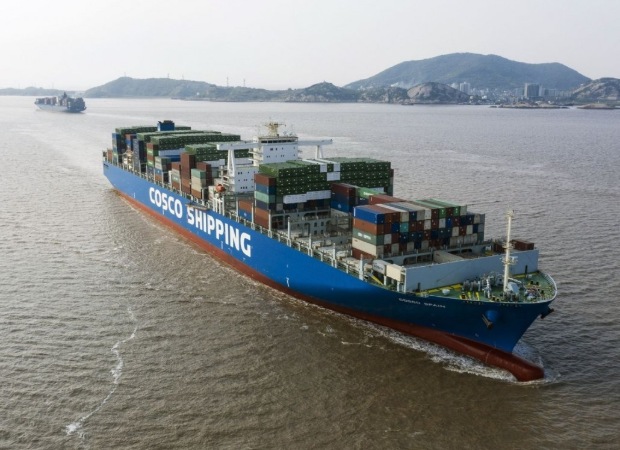
Sea freight is the long-term scaling method for most importers.
-
LCL works when you do not fill a container and want flexibility.
-
FCL becomes the most efficient option when volumes grow because it offers better control and often reduces handling touchpoints.
Key advantages:
-
Best cost per unit at scale
-
Ideal for bulky products and wholesale inventory
-
Strong fit for stable reorder cycles
Key limitations:
-
Longer lead time
-
Delays become expensive if clearance is slow or documentation is inconsistent
If you are building a steady supply line into South Africa, sea freight planning usually becomes the core of your strategy.
Incoterms and Cost Transparency (EXW vs FOB vs DDP)
South African importers benefit from choosing a structure that keeps costs visible and responsibility clear.
-
EXW can look cheap but makes you responsible from the factory gate.
-
FOB is often preferred because the supplier handles export-side delivery and export clearance, while you control international shipping and the South Africa import plan.
-
DDP can seem convenient, but it may reduce transparency around duties, VAT, brokerage, and local fees.
If you want repeatable landed cost calculations, transparency is more valuable than convenience.
South Africa Duties, VAT, and Customs Reality in 2026
Import costs into South Africa typically include:
-
Product cost
-
International freight cost
-
Customs duty (based on classification)
-
VAT on import (15% as applicable)
-
Brokerage and clearance fees
-
Local handling and storage costs (if delays occur)
-
Domestic distribution after clearance
VAT as a Cash-Flow Factor
VAT on import can influence working capital. Even if your business structure allows recovery or offset mechanisms, timing matters. If you scale imports, the cash tied up in taxes and clearance timing can become a bottleneck.
Successful importers build VAT timing into their purchasing and inventory plan, not as an afterthought. The goal is to avoid situations where stock arrives but cash is trapped in clearance costs.
Duties Depend on Correct Classification
Customs duties are driven by classification. Two products that appear similar can be treated differently depending on:
-
Material composition
-
Intended use
-
Product construction details
-
Whether items are bundled or sold as sets
-
Packaging and presentation
Misclassification commonly leads to:
-
Unexpected duty costs
-
Clearance delays
-
Reclassification disputes
-
Extra document requests
-
A higher overall landed cost than planned
The best protection is to treat HS classification and clear product descriptions as foundational steps, not last-minute paperwork.
Clearance Discipline is What Prevents "Random" Delays
South Africa imports tend to clear smoothly when documentation is consistent and detailed. Delays often happen due to predictable issues:
-
Vague invoice descriptions that do not clearly identify the product
-
Invoice and packing list mismatches (quantities, carton counts, weights)
-
Incorrect or unrealistic valuation practices
-
Missing importer details or inconsistent consignee information
-
Product categories that trigger additional checks without preparation
This is why documentation is not just admin work. It is margin protection.
What Most First-Time Buyers Miss Importer Responsibility in South Africa
A common mistake is assuming that shipping and clearance will "sort itself out." In real importing, responsibility must be defined before production begins and before goods ship.
You should be able to answer these questions clearly:
-
Who is the importer of record?
-
Who prepares and submits customs documentation?
-
Who pays duties, VAT, and clearance fees?
-
Who confirms HS classification and product description accuracy?
-
Who is responsible if documents are wrong or inconsistent?
-
Who handles product issues if the bulk shipment does not match the sample?
When these are unclear, shipments become expensive. When they are clear, importing becomes repeatable.

How to Find Suppliers in China for South Africa
Supplier discovery is easy. Supplier reliability is what determines long-term success. South African importers often succeed by using fast discovery channels combined with strict verification.
Source from Wholesale Websites
Wholesale platforms are useful for:
-
Discovering suppliers quickly
-
Comparing price ranges
-
Building a shortlist across multiple factories
But the right approach is not to "choose the cheapest listing." The right approach is:
-
Build a shortlist of multiple suppliers
-
Compare quotes based on the same specification
-
Verify capability before scaling
Verification should include:
-
Whether the supplier is a factory or trading company
-
Evidence of stable output at scale
-
Sample consistency across repeated requests
-
Ability to meet packaging and carton strength requirements
-
Professional documentation habits (clear invoice descriptions, consistent data)
-
Lead time reliability and production capacity clarity
Visit Wholesale Markets and Trade Shows
Markets and fairs can accelerate product discovery and comparison.
Best use cases:
-
General merchandise sourcing
-
Packaging and retail display items
-
Quick comparison of product options across many suppliers
A strong approach is:
-
Use markets to discover options quickly
-
Follow with sampling, verification, and inspection before scaling
To simplify supplier discovery and verification, the following table compares the key advantages and focus areas of wholesale websites versus wholesale markets and trade shows.
|
Aspect |
Wholesale Websites |
Wholesale Markets & Trade Shows |
|
Primary Use |
Quickly find and compare multiple suppliers online. |
Inspect products and suppliers in person for faster comparison. |
|
Best For |
Preliminary sourcing and building an initial shortlist. |
General merchandise, packaging, and retail display items. |
|
Advantage |
Fast, convenient, and allows easy price comparison. |
Hands-on inspection and immediate supplier feedback. |
|
Focus |
Verify supplier legitimacy, production stability, and documentation. |
Identify promising suppliers quickly, then confirm via sampling and inspection. |
|
Key Consideration |
Don't choose the cheapest option; ensure capability and consistency. |
Use visits to shortlist suppliers, then validate quality before scaling. |
|
Recommemd |
Work with a China Sourcing Agent
For South African buyers who cannot travel frequently, a sourcing partner can reduce risk dramatically. The value is not just finding a supplier. The value is building a reliable system across verification, sampling, production control, inspections, consolidation, and documentation.
A sourcing partner can help you:
-
Shortlist suppliers based on capability, not only price
-
Verify legitimacy and reduce fraud risk
-
Control sampling and prevent "version confusion"
-
Follow production to prevent silent material changes
-
Run quality inspections before shipment
-
Consolidate goods from multiple suppliers into one shipment
-
Keep documents consistent for smoother customs clearance
-
Coordinate logistics to protect unit economics
EJET Procurement supports end-to-end sourcing services, including supplier verification, factory audit, sample coordination, order follow-up and quality inspection, warehousing and consolidation, export documentation, logistics coordination, and after-sales support.
A Practical China-to-South Africa Sourcing Workflow that Stays Profitable in 2026
A repeatable workflow reduces surprises and increases margins. Here is a system that South African importers can apply across most product categories.
Step 1: Build a Product Specification File to Avoid Misunderstandings
A proper specification should include:
-
Materials and dimensions
-
Tolerances (what variation is acceptable)
-
Finishing and appearance standards
-
Packaging requirements and carton strength
-
Branding and labeling requirements (if any)
-
Acceptable defect standards (pass/fail criteria)
When you define these clearly, suppliers quote the same product and production consistency improves.
Step 2: Shortlist Suppliers and Verify before You Scale
Shortlist multiple suppliers to reduce risk and create leverage. Verification should focus on:
-
Legitimacy and export readiness
-
Consistency and quality systems
-
Communication clarity and responsiveness
-
Ability to follow specifications precisely
-
Packaging and labeling capability
Many importers lose money by scaling after one conversation and one sample.
Step 3: Sample in Rounds and Lock the Bulk Version
Sampling is not a one-step event. A strong approach is:
-
Initial sample to confirm baseline quality
-
Revised sample if changes are needed
-
Pre-production sample to lock the final version before mass production
This reduces the common problem where the sample looks great but the bulk order differs.
Step 4: Put Quality Control before Shipment
Quality control should happen before goods leave China. A strong QC plan can include:
-
In-process checks for larger orders
-
Final inspection before shipment
-
Packaging checks to prevent damage in long-distance shipping
Fixing issues at the factory stage is cheaper than dealing with defects after arrival in South Africa.
Step 5: Consolidate and Simplify
If you source multiple SKUs or multiple suppliers, consolidation helps you:
-
Reduce shipping cost per unit
-
Reduce paperwork complexity
-
Reduce the number of clearance events
-
Improve inventory receiving and control on arrival
Step 6: Build a Repeatable Landed-Cost Model
A stable landed-cost model should include:
-
Product cost
-
Freight and insurance (if applicable)
-
Duties and VAT based on classification
-
Clearance and handling fees
-
Domestic distribution costs
-
Contingency buffer for delays, rework, or replacement
If you only plan product cost plus freight, you are likely to face surprises later.
Step 7: Plan Inventory around South Africa's Demand and Logistics Realities
South Africa's distribution and delivery costs can change your real margin. Plan inventory around:
-
Seasonal demand patterns
-
Promo periods and sales cycles
-
Your domestic delivery cost structure
-
Lead time buffers to avoid stockouts
Importers who plan early avoid premium freight and protect their margins.
FAQ
Is sourcing from China to South Africa still worth it in 2026?
Yes. China remains a strong manufacturing origin, and South Africa remains a large and diverse market. Profitability depends on supplier verification, consistent quality control, and clean import planning.
What shipping method is best from China to South Africa?
It depends on your shipment size and urgency:
-
Express shipping for samples and small urgent cartons
-
Air freight for timing-sensitive inventory
-
Sea freight for scaling at the best unit economics
How do I avoid customs delays in South Africa?
Use accurate product descriptions, keep invoice and packing list data perfectly consistent, confirm classification early, and ensure carton counts, weights, and quantities match across documents.
Should I use a China sourcing agent for South Africa imports?
If you cannot visit suppliers regularly, if you are sourcing multiple SKUs, or if quality consistency matters, a sourcing agent can reduce risk and help you build a repeatable process.
What is the biggest mistake importers make when importing into South Africa?
Scaling too early without stable supplier verification, clear specifications, and pre-shipment quality control. One inconsistent batch can create returns, disputes, and major operational costs.
