

Sourcing from China to the UAE continues to be one of the most profitable import strategies in 2026. The UAE is a gateway market connecting Asia, the Middle East, and Africa. Efficient imports can serve both local demand and regional distribution from a single hub.
But only when it is managed with the right structure. Successful importing today is no longer just about finding cheap products. It requires understanding landed costs, shipping strategy, VAT and customs handling, supplier verification, and quality control systems that protect your brand.
This guide explains how UAE buyers can build a reliable China sourcing system step by step. Whether you are importing for retail, wholesale, private label, or re-export, the goal is the same: predictable costs, consistent quality, and smooth clearance every time.
Why Sourcing from China to the UAE is a Smart Move in 2026
The UAE is not only a high-spending consumer market but also one of the world's most efficient trading hubs. Many businesses import goods from China to sell locally, while others use the UAE as a gateway. They re-export across the GCC, MENA, and parts of Africa.
According to Khaleej Times, in the first nine months of 2025, GCC markets accounted for nearly half of UAE exports and re-exports, with Africa contributing about 10%.
China, meanwhile, provides unmatched supplier depth and production flexibility. When these strengths align, UAE buyers can build profitable pipelines for private label, wholesale, and B2B supply.
In 2026, the difference between successful importers and struggling importers usually comes down to three things:
-
Supplier verification: the UAE market punishes inconsistent quality fast.
-
Landed cost control: small surprises in duty, VAT, and handling fees can destroy margins.
-
Shipping and documentation discipline: UAE clearance is frustrating when documents are incorrect.

What Products the UAE Import from China (What Sells Consistently)
The UAE imports a wide range of products from China across retail, construction, hospitality, and distribution channels. Based on Trending Economics latest data, the categories that are commonly sourced include:
|
Product Category |
Import Value from China (2024) |
Notes / Source |
|
Electronics & Accessories |
$35.7 B |
Largest category; includes cables, small devices, and electronic components. |
|
Machinery & Industrial Tools |
$15.4 B |
Includes machinery, industrial equipment, and some hardware/tools. |
|
Plastics & Packaging Materials |
$1.9 B |
Represents packaging items and plastic products. |
|
Lifestyle & General Merchandise |
$1.7 B |
Covers toys, lifestyle products, and small consumer goods. |
|
Furniture, Lighting & Décor |
$1.3 B |
Includes furniture, lighting, and decorative items for hospitality, short-term rentals, and commercial fit-outs. |
What makes the UAE different from many markets is how strongly it operates through channels. You might sell locally, but you may also sell through distributors, resellers, marketplaces, and cross-border export routes. That means packaging, labeling consistency, and reliable supply schedules matter more than "one good deal."
If you are importing for resale in the UAE, you should also think about climate and handling realities. Heat exposure during transport and storage can impact adhesives, plastics, batteries, and certain materials.
A product that survives in mild climates may deform, leak, or degrade in Gulf conditions. That is why the UAE-focused sourcing approach often more meticulous. It includes stricter packaging requirements, stronger carton standards, and more careful storage and consolidation planning.
Shipping from China to the UAE: How UAE Importers Choose
Shipping from China to the UAE is usually straightforward, but the "best" method depends on whether you are importing samples, stocking a warehouse, or supplying a distributor.
Express Shipping
Express is used for samples, small cartons, and urgent replenishments. It is fast and easy to track, but it is rarely the best option for scaling because the cost per unit can become too high.
Air Freight
Air freight is often used when you need speed but you are shipping too much volume for express to make sense. This can be ideal for higher-value items, product launches, or seasonal spikes. Air is also useful when you want to reduce the cash tied up in long lead times, but it requires clean documentation to avoid clearance delays.
Sea Freight (LCL and FCL)
Sea freight is usually the long-term preferred choice for UAE importers scaling volume, especially for bulky items, packaging materials, furniture, and wholesale inventory.
LCL works when you are importing smaller volumes and you want to keep orders flexible.
FCL becomes the most efficient and controllable option when you scale, particularly if you consolidate multiple SKUs or multiple suppliers.
The UAE Advantage: Predictable Hub Logistics
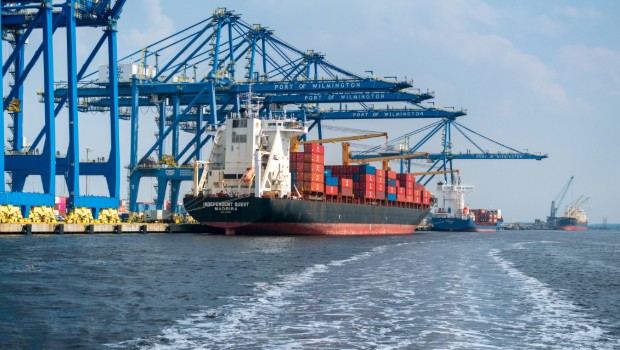
One of the main reasons sourcing from China to the UAE is efficient is the country's advanced logistics infrastructure. Key ports like Jebel Ali and Khalifa Port offer high throughput, modern container handling, cold storage, and streamlined customs. Jebel Ali handled over 15.5 million TEUs in 2024.
Combined with free zones and logistics hubs, businesses can consolidate shipments and manage inventory centrally. This setup also allows on-demand distribution, reducing costs, delays, and administrative overhead.
Using the UAE as a hub also improves inventory control and responsiveness, allowing mixed shipments, optimized packaging, and quality assurance before regional distribution. For seasonal peaks or last-minute orders, a central hub ensures fast, flexible, and cost-effective delivery.
The UAE"s logistics ecosystem provides a predictable and scalable gateway for sourcing from China. It also helps businesses maintain control over cost, timing, and quality.
Incoterms (EXW vs FOB vs DDP) and What UAE Buyers should Prioritize
UAE importers benefit from choosing a structure that keeps costs visible.
-
EXW can look cheap but makes you responsible from the factory gate, which can be risky if you are not experienced.
-
FOB is often preferred because the supplier handles export-side delivery and export clearance, while you control the main freight and the UAE import plan.
-
DDP can feel convenient but may reduce transparency around duties, VAT, clearance, and local handling fees.
If your goal is repeatable importing, the structure that gives you clear landed cost and clear responsibility is usually the best one.
VAT, Customs Duty, and UAE Import Costs (2026 Practical View)
UAE import costs typically include: Product cost, freight cost, customs duty, VAT, and local clearance and handling fees.
UAE Customs Duty (General Concept)
Many general imported goods into the UAE follow a standard customs duty approach. According to the UAE official website, the rate of customs duty is 5%. Especially, it is 50% on alcohol and 100% on cigarettes.
The important point is not the headline number. The important point is that duty depends on how your goods are classified and declared, and the duty treatment can differ by product category.
If you want predictable landed costs, you must treat HS classification and product description discipline as a core part of sourcing. When a supplier uses vague descriptions, it increases the chance of clearance questions and unexpected fees.
UAE VAT (General Concept)
The UAE applies 5% VAT on goods, and imported goods typically fall into VAT handling at the point of import depending on how the business is registered and how the shipment is structured. VAT can become a cash-flow factor, especially when you scale. Many importers underestimate how much working capital VAT and clearance timing can absorb.
If your plan is to build a stable pipeline, you should include VAT timing in your cash-flow planning, not just in your "profit per unit" calculation.
Free Zones vs Mainland Importing (What Changes Operationally)
The UAE has a well-known free zone ecosystem. Many businesses use free zones for warehousing, trading, and re-export. The practical difference is that your import pathway can change depending on whether your goods are intended for:
-
Local UAE consumption
-
Storage and re-export
-
Distribution across GCC.
This is not a place to guess. It is a place to design the pathway around your business model. A free zone strategy can be extremely efficient, but only if your documentation and inventory control are set up correctly.
The Biggest UAE Cost Surprise: Local Fees and "Small Friction"
Many importers focus only on product cost and freight. In reality, local handling, clearance fees, storage fees during delays, and extra charges caused by incorrect paperwork can be the difference between a profitable shipment and a disappointing one.
That is why a clean UAE import plan is built around preventing delays:
-
Accurate invoice and packing list.
-
Consistent product descriptions across documents.
-
Clear carton counts, weights, and dimensions.
-
A realistic value declaration aligned with commercial reality.
UAE Import Clearance Reality: What Causes Delays
UAE customs processes are often efficient, but delays usually come from predictable issues.
Vague or Inconsistent Product Description
Descriptions like "accessories," "parts," "items," or "goods" are not acceptable for smooth clearance. Your documents should clearly state what the product is, what it is made from, and what it is used for.
Inconsistent Quantities and Packaging Data
If the invoice says one quantity and the packing list says another, clearance questions happen. If carton count and weights don"t match transport data, delays happen. This is not a China problem or a UAE problem. It is a documentation discipline problem.
Missing or Unclear Importer Details
UAE importing requires clear importer identity and commercial structure. If you are using a broker or forwarder, make sure the importer details are correct and consistent.
Product-Specific Controls
Some product categories trigger extra requirements, such as restricted goods, safety-sensitive products, or goods requiring additional approvals. The correct approach is to identify this before production and shipping, not after the shipment is already moving.
High-Risk Products That Require Approval in the UAE
|
Product Category |
Why It Triggers Controls |
Typical Requirement |
|
Cosmetics & Personal Care |
Direct contact with skin; safety and ingredient compliance |
Product registration and approval before import |
|
Food & Food-Contact Products |
Consumer health and safety |
Ingredient disclosure, labeling compliance, prior approval |
|
Medical Devices & Health Products |
Health and regulatory risk |
Authority approval and product registration |
|
Children's Products & Toys |
Safety standards and age-related risks |
Conformity certificates and safety testing |
|
Batteries & Power Banks |
Fire and transport safety risks |
Product declaration; transport compliance documents |
|
Wireless / Telecom Devices |
Radio frequency and communication control |
TDRA approval before import |
|
Drones & Surveillance Equipment |
Security and privacy concerns |
Special permits or restricted use approval |
|
Chemicals & Industrial Materials |
Environmental and safety regulations |
Material safety documentation and permits |
|
Used or Refurbished Goods |
Quality, safety, and compliance risk |
Category-specific approval or import restriction |
How to Find Suppliers and Protect Your Brand in China for UAE Buyers
Finding suppliers is easy. Finding reliable suppliers is the hard part. UAE buyers often succeed by combining fast discovery with strict verification.
Wholesale Sourcing Platforms
Online wholesale platforms are useful for discovery and initial price comparison, especially when you're building a shortlist. But a listing is not proof of manufacturing capability, quality consistency, or export readiness. If you rely on platform messaging alone, you risk getting a good sample and a bad bulk order.
For UAE buyers, verification should confirm:
-
Whether the supplier is a real factory or a trading company.
-
Whether they can maintain consistent output at scale.
-
Whether they can meet packaging expectations and withstand Gulf climate handling.
-
Whether they can provide stable lead times and consistent documentation.
Wholesale Markets and Trade Shows
Markets and fairs are helpful when you want to compare many products quickly, especially for general merchandise, packaging, and retail-ready items. Yiwu is often used by buyers who want speed and variety. Trade fairs can be better for manufacturer relationships, OEM projects, and technical categories.
The key is to treat markets as discovery, not as the final decision. Discovery should be followed by verification and quality control.
Using a China Sourcing Agent
For UAE businesses that cannot travel frequently or that need consistent repeatable supply, working with a sourcing partner is often the most efficient path.
A sourcing agent helps by:
-
Shortlisting suppliers based on capability, not just price.
-
Verifying supplier legitimacy and auditing where needed.
-
Managing samples and ensuring the bulk order matches approvals.
-
Setting quality standards and running inspections before shipment.
-
Consolidating goods from multiple suppliers for better freight economics.
-
Keeping documentation consistent so UAE clearance is smooth.
EJET Procurement supports end-to-end sourcing, including supplier verification, factory audit, sampling, production follow-up, quality inspection, consolidation, export documentation, logistics coordination, and after-sales support. That structure is especially useful for UAE importers who want predictable landed costs and stable quality.
If you want help building a reliable China-to-UAE pipeline, you can get a free quote for sourcing from China to the UAE.
A Practical China-to-UAE Sourcing Workflow that Stays Profitable in 2026
Start with a Specification File that Prevents Misunderstandings
A UAE-ready product specification should include:
Materials and dimensions, packaging requirements, labeling instructions if needed, acceptable defect rates, and product performance expectations.
The stronger your specification, the less room suppliers have to "interpret," and the fewer surprises you see when the bulk shipment arrives.
Shortlist Suppliers and Verify before Scaling
Shortlisting multiple suppliers is not wasted effort. It gives you leverage and reduces risk. Verification should confirm capability, legitimacy, production consistency, and export readiness. UAE importers who scale too early often end up paying twice: once for the bad inventory and again for the replacement.
Sample in Rounds and Lock the Bulk Version
Sampling should confirm both product quality and packaging strength. A common mistake is approving a sample but not locking packaging specs, carton strength, and labeling standards. In Gulf distribution, packaging strength and handling stability matter more than many importers expect.
Put Quality Control before Shipment
Quality issues are cheapest to fix at the factory stage. They are expensive to fix after arrival in the UAE. Pre-shipment inspection prevents bad stock from reaching your warehouse and protects your brand reputation.
Consolidate and Simplify
If you source multiple SKUs or multiple suppliers, consolidation reduces shipping cost per unit and reduces documentation complexity. Fewer shipments also means fewer clearance events and fewer chances for errors.
Build a Repeatable Landed-Cost Model
A repeatable model includes product cost, freight, duty treatment, VAT implications, local fees, and contingency. If you only plan product cost + freight, you are not planning. You are guessing.
Here is EJET China–UAE Landed Cost Model Template
|
Cost Item |
Amount (USD) |
|
Product Cost (EXW / FOB) |
|
|
China Origin Charges |
|
|
International Freight |
|
|
Insurance |
|
|
Customs Duty |
|
|
VAT |
|
|
UAE Clearance & Handling Fees |
|
|
Local Delivery / Storage |
|
|
Contingency (3–8%) |
|
|
Total Landed Cost |
|
|
Total Units |
|
|
Landed Cost per Unit |
Plan Your Inventory Around UAE Sales Cycles
In the UAE, retail cycles can spike around major sale seasons, gifting seasons, and tourism demand. Businesses that plan inventory ahead of peak windows protect margins because they avoid premium freight and last-minute stockouts.
FAQ
Is sourcing from China to the UAE still worth it in 2026?
Yes, especially because the UAE is both a strong consumer market and a hub for regional distribution. Profitability depends on supplier verification, consistent quality control, and a clear VAT and duty plan.
What is the best shipping method from China to the UAE?
Express is best for samples and small urgent orders. Air freight works for fast replenishment. Sea freight is usually the best option for scaling due to lower unit cost. The best choice depends on your shipment size and margin.
Should I import into a free zone or mainland?
It depends on whether you sell locally, store for re-export, or distribute across GCC. The correct pathway should be designed around your business model and documentation setup.
How do I avoid customs delays in the UAE?
Use accurate product descriptions, keep invoice and packing list data perfectly consistent, avoid vague descriptions, and confirm any product-specific restrictions early.
Should I use a China sourcing agent for UAE imports?
If you cannot visit suppliers frequently, if you need stable quality, or if you are sourcing multiple SKUs, a sourcing agent can reduce risk and make the process repeatable.
