

A U.S. home goods company I consulted for discovered they'd overpaid $2.4 million over three years. Their "factory" was actually a sourcing agent charging a 40% markup above direct pricing. They only found out because someone at the agent's office accidentally forwarded an internal invoice. Three years. $2.4 million. And this was a company that thought they'd done their homework.
I've spent 15 years helping importers source from China, and that case still sticks with me — not because the fraud was sophisticated, but because the company's vetting process looked solid on paper. They checked the business license. They ordered samples. They even visited the facility once.
What they didn't have was a system for what happens after you say yes to a supplier. And that's where most relationships actually fall apart. Not at the vetting stage — in the first six months of management, when quality starts to drift and nobody's watching closely enough to catch it.
Why Vetting Alone Won't Save You
Roughly 30% of shipments inspected in China fail AQL standards. Only 59% of audited factories pass compliance checks — meaning 41% of factories that voluntarily submit to audits still can't meet basic requirements. Inspection demand grew 29% year-over-year in 2024, with EU buyers up 22% and U.S. buyers up 17%. More people are checking. The failure rates aren't improving.
These numbers tell you something uncomfortable: even suppliers who pass your initial vetting can and do fail on actual orders.
I've seen a U.S. company wire $800,000 to a supplier they'd worked with for two years. The factory shut down. The owner disappeared. No product, no refund, no legal recourse. I personally know half a dozen importers across the U.S. and Europe who went bankrupt from similar situations — not from picking obviously bad suppliers, but from trusting good-looking ones without ongoing verification.
This risk hits small and mid-size importers hardest. Large multinationals have dedicated China procurement teams, China-specific legal contracts, and the volume leverage to demand compliance. If you're running a $500K-$5M annual import operation, you likely have none of that infrastructure — which means your exposure per dollar spent is far higher than a Fortune 500 buyer sourcing from the same factory.
The vetting checklist everyone publishes — verify the business license, confirm factory vs. trading company, request certifications — that's table stakes. It filters out the obvious scams. It does nothing to protect you from a supplier who performs well on order one and deteriorates on order five. If you want to avoid the common sourcing mistakes that cost real money, you need a system that extends well past the first purchase order.
A Vetting Framework That Tests Under Pressure
Most vetting guides hand you a document checklist: business license, export license, ISO certificate, test reports. That's fine for eliminating outright frauds. But I've watched suppliers with perfect paperwork deliver terrible product by order three.
The vetting that actually predicts long-term performance tests how a supplier handles friction — not how they look when everything's easy.
The three stress tests I run before committing:
- The spec change test. Midway through sample development, request a minor modification — different material thickness, adjusted color, altered packaging dimensions. A reliable factory responds with a timeline and cost impact within 48 hours. A problematic one goes silent for a week, then delivers the original spec anyway.
- The problem response test. Deliberately flag a minor issue with the sample — a cosmetic imperfection, a measurement that's 2 mm off spec. Watch how they respond. Do they acknowledge it and offer a fix? Or do they argue it's within tolerance and push you to accept? Their reaction to a small complaint predicts exactly how they'll handle a big one.
- The timeline pressure test. Ask about expedited production for a portion of the order. You're not actually going to rush it — you want to see whether they give you a realistic answer ("we can cut 5 days but it adds 8% to unit cost") or just agree to everything ("no problem, sir"). Suppliers who say yes to everything before the order are the ones who say "sorry, delay" after you've wired the deposit.
Paper checks only go so far. A factory audit process — whether you do it yourself or through a third party — reveals things no certificate can: actual production capacity, worker conditions, equipment age, and whether the "factory" is really just a showroom attached to a warehouse.
If you're sourcing safely on Alibaba, remember that Gold Supplier badges and Trade Assurance are marketing tools, not quality guarantees. I've audited Gold Suppliers running production out of residential apartments. The badge means they paid a fee. Nothing more.
This is where working with an experienced sourcing agent who's physically in China changes the equation. Someone who can drive to the factory unannounced, walk the production floor, and verify that the 200-worker facility in the photos isn't actually a 30-person workshop. If you're evaluating that option, here's a framework for choosing a sourcing agent who actually adds value rather than another layer of markup.
Run all three stress tests before your first production order. If a supplier fails two out of three, they'll cost you more in management headaches than you'll ever save on unit price.
The Onboarding Phase Everyone Skips
Your first production order is not a celebration — it's a calibration run. Treat it that way and you'll catch 90% of the problems that blow up on order three or four.
Most importers go straight from "supplier approved" to "first bulk order." They skip the part where you establish how this relationship actually operates day-to-day. That gap is where miscommunication, missed specs, and payment disputes take root.
What onboarding should look like:
Set the communication cadence before production starts. Agree on a primary contact, a backup contact, a response time expectation (I use 24 hours for routine items, 4 hours for production issues), and a weekly update format. I send suppliers a simple template: order status, production percentage complete, any issues flagged, next milestone date. If they can't fill out four fields once a week, that tells you something.
Lock down payment terms in writing. The standard 30/70 split (30% deposit, 70% before shipment) works for most situations. Never pay 100% upfront — I don't care how good the samples were. For new suppliers, I sometimes push for 30/30/40: deposit, mid-production payment after passing DUPRO inspection, and final payment after pre-shipment inspection clears. It gives you two checkpoints instead of one.
Get a China-enforceable contract — not your standard U.S. template. Most SMEs skip this or use an English-language contract that's unenforceable in Chinese courts. A bilingual contract governed by Chinese law, with the Chinese version as the controlling language, is the minimum. It should specify product specs by reference to your spec sheet, delivery penalties, IP ownership, and dispute resolution venue. Large multinationals have been doing this for decades. SMEs who skip it are gambling with their business — and I've seen more than one lose that bet.
Create a product specification document that leaves zero room for interpretation. Not a paragraph description — a spec sheet with exact measurements, materials, Pantone colors, packaging requirements, labeling, and photos of acceptable vs. unacceptable quality. I've seen a $40,000 order rejected at customs because the supplier used "equivalent" packaging material that didn't meet import labeling requirements. The buyer's spec sheet said "similar to sample." That's not a spec. That's a wish.
Run your first order smaller than you want to. Your first order doesn't need to be perfect. It needs to be small enough that imperfect doesn't hurt. Use it to validate the entire chain: communication, production quality, packaging, shipping documentation, and timeline accuracy. Scale up on order two once you've confirmed the system works.
The onboarding phase takes two to four weeks of extra effort. It saves you months of firefighting later. Build the operating system now, or rebuild it in crisis mode after a failed shipment.
Managing Suppliers Through the First Six Months
Here's the pattern I've seen play out dozens of times: excellent first-article samples. Good pilot run. First two purchase orders filled on time with solid quality. Then the gradual decline starts. Slightly thinner material. A few more cosmetic defects per carton. Delivery pushed back "just three days." By order five or six, you're dealing with a different supplier than the one you vetted.
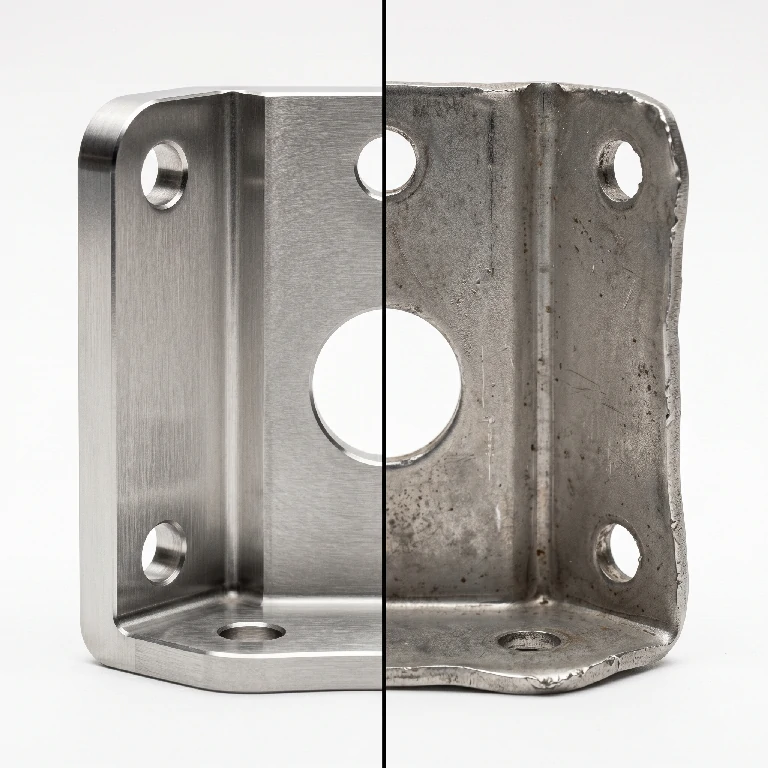
This is quality fade, and it's not accidental. Suppliers deliberately substitute lower-cost materials after they've established trust through several successful orders. The changes are small enough that you won't notice shipment-to-shipment. But compare your first order to your sixth side by side, and the difference is obvious.
The five-point system that catches quality fade early:
- Updated QC checklists before every order. Don't reuse the same checklist from order one. Add any issues found in previous inspections. Tighten tolerances on areas where you've seen drift. The checklist should get more specific over time, not less.
- Routine pre-shipment inspections. Not just on the first order — on every order. The moment you skip an inspection because "this supplier is reliable now," you've opened the door. Having a third-party QC team run AQL 2.5 sampling on every shipment is the single most cost-effective quality investment you can make. A quality assurance checklist tailored to your product category keeps inspectors focused on what actually matters.
- Incoming raw material verification. Ask your supplier to photograph and document the raw materials before production begins. If you specified 304 stainless steel and they're using 201, you want to know before 10,000 units are stamped — not after your customer's product rusts in three months.
- Periodic lab testing. For products with safety or compliance requirements, send samples from production runs (not pre-approved samples the supplier hand-picks) to an independent lab. Annual testing is minimum. Quarterly is better for high-volume products.
- Penalty and incentive schemes. Build quality metrics into your commercial relationship. A 2% rebate for zero-defect shipments costs you almost nothing and gives the factory floor manager a reason to care. A clearly defined penalty for AQL failures above threshold — say, supplier covers re-inspection costs and provides a 5% discount on the next order — makes quality fade unprofitable.
The Post-Chinese New Year Risk Window
The six weeks after Chinese New Year are the highest-risk period on the sourcing calendar. Factories reopen at reduced capacity. Experienced workers who went home for the holiday don't all come back — some find jobs closer to their families, some switch industries. New hires replace them with zero training on your product specifications.
I schedule an extra inspection during this window every year, even for my most reliable suppliers. It's not distrust — it's acknowledging reality. A factory running at 60% of its trained workforce will produce differently than one at full strength. Plan for it.
Communication That Prevents Problems
Don't wait for problems to call your supplier. A weekly 15-minute check-in during active production — even just a WeChat voice message — signals that you're paying attention. Suppliers prioritize buyers who maintain consistent contact. The ones who only reach out when something breaks get pushed to the back of the production queue.
Keep communication factual and specific. "Quality seems lower" is useless. "Units 47 through 52 in carton 12 had visible scratches on the left panel, see attached photos" gives the factory something to act on. Document everything in writing — WeChat messages count, verbal agreements don't.
One cultural note that saves a lot of frustration: in Chinese business communication, a direct "no" is rare. "That might be difficult" or "we'll try our best" often means no. If you hear those phrases about a spec requirement or deadline, treat them as a red flag and dig deeper — don't assume optimism. Ask for a specific alternative timeline or solution. The suppliers who give you straight answers, even uncomfortable ones, are the ones worth keeping.
Build a simple scorecard you update quarterly: on-time delivery rate, inspection pass rate, communication responsiveness, and issue resolution speed. Share it with your supplier. The act of measuring and sharing changes behavior faster than any contract clause.

When to Fix the Relationship vs. When to Walk Away
Not every supplier problem means you need a new supplier. Replacing a supplier costs 3-6 months of lead time, new sample development, and the risk of starting the quality fade cycle all over again with someone new. But staying too long with a deteriorating supplier costs more.
Fixable problems — invest in the relationship:
- Occasional quality dips that the supplier acknowledges and corrects within one order cycle
- Communication delays that improve after you establish clearer protocols
- A single missed deadline with a credible explanation (raw material shortage, power outage, local government inspection)
- Pricing increases that align with documented raw material cost changes
Terminal signals — start your exit:
- Quality complaints met with denial or blame-shifting, repeatedly
- Unexplained material substitutions discovered during inspection
- Financial instability signals: requesting full payment upfront when terms were 30/70, sudden workforce reductions, or your sourcing agent reporting unusual activity at the facility
- The supplier stops allowing factory visits or third-party inspections
- You discover they've been subcontracting your orders to a facility you haven't vetted
When you decide to exit, don't burn the bridge publicly — but move fast privately. Qualify a backup supplier before you cut the primary. Overlap production for at least one order cycle so you're never without supply. Transfer your spec sheets, QC checklists, and inspection history to the new supplier on day one.
The best insurance against a bad exit is never being dependent on a single source. For every critical product, I maintain at least two qualified suppliers. One gets 70% of volume, the other gets 30%. The backup supplier stays sharp because they're producing regularly, and you have leverage because neither supplier owns your entire supply. If you're managing multiple suppliers across categories, a supplier consolidation strategy helps you scale without losing control.
Your Supplier Management System
The importers who consistently get good results from Chinese suppliers aren't luckier than everyone else. They run a system: stress-test before committing, onboard with documented expectations, inspect on every order, score performance quarterly, and maintain a qualified backup.
Most of your competitors are still treating supplier selection as a one-time event and wondering why quality keeps slipping. The gap between "we vetted them" and "we manage them" is where margin lives — and where most of it gets lost.
Start with one change this week. Pick your highest-volume supplier and build a scorecard: four metrics, updated quarterly, shared with the factory. That single action will tell you more about your supplier relationship than any audit report. And if the supplier pushes back on being measured, you've just learned the most important thing about them.
Frequently Asked Questions
How do you verify a Chinese supplier is legitimate?
Start with the business license — every registered Chinese company has one, and you can cross-check it on China's National Enterprise Credit Information Publicity System (NECIPS). But paper verification is the floor, not the ceiling.
Run stress tests: request a spec change mid-sample development, flag a minor quality issue, and ask about rush production. How a supplier handles friction tells you more than any certificate. For physical verification, a factory audit — either in person or through a third party — confirms whether the facility matches the claims.
What is quality fade and how do you prevent it?
Quality fade is the deliberate, gradual substitution of cheaper materials or shortcuts after a supplier has earned your trust through several successful orders. It's not accidental — it's a margin recovery tactic.
Prevention requires a system, not vigilance: updated QC checklists before every order, pre-shipment inspections on every shipment (not just the first), incoming raw material verification, periodic lab testing from production samples, and penalty/incentive schemes that make cutting corners unprofitable.
What documents should I request from a Chinese supplier?
Business license (营业执照), export license, ISO or industry-specific certifications, and third-party test reports for your product category.
But the document that matters most is the one you create: a bilingual contract governed by Chinese law, with the Chinese version as the controlling language. It should reference your product spec sheet, define delivery penalties, establish IP ownership, and name a dispute resolution venue in China. An English-only contract is functionally unenforceable in Chinese courts.
How do you manage supplier relationships in China long term?
Set a communication cadence before production starts — weekly updates during active orders, monthly check-ins during quiet periods. Build a quarterly scorecard tracking four metrics: on-time delivery rate, inspection pass rate, communication responsiveness, and issue resolution speed. Share it with the supplier.
The act of measuring and sharing changes behavior faster than any contract clause. Maintain at least two qualified suppliers for every critical product — one at 70% volume, one at 30% — so you're never dependent on a single source.
How much should I pay upfront to a Chinese supplier?
The standard structure is 30/70: 30% deposit to start production, 70% before shipment after passing pre-shipment inspection. Never pay 100% upfront, regardless of sample quality.
For new suppliers, push for 30/30/40: deposit, mid-production payment after passing DUPRO inspection, and final payment after pre-shipment inspection clears. This gives you two quality checkpoints instead of one, and keeps the supplier financially motivated through the entire production cycle.
