

$2.4 Million Lesson
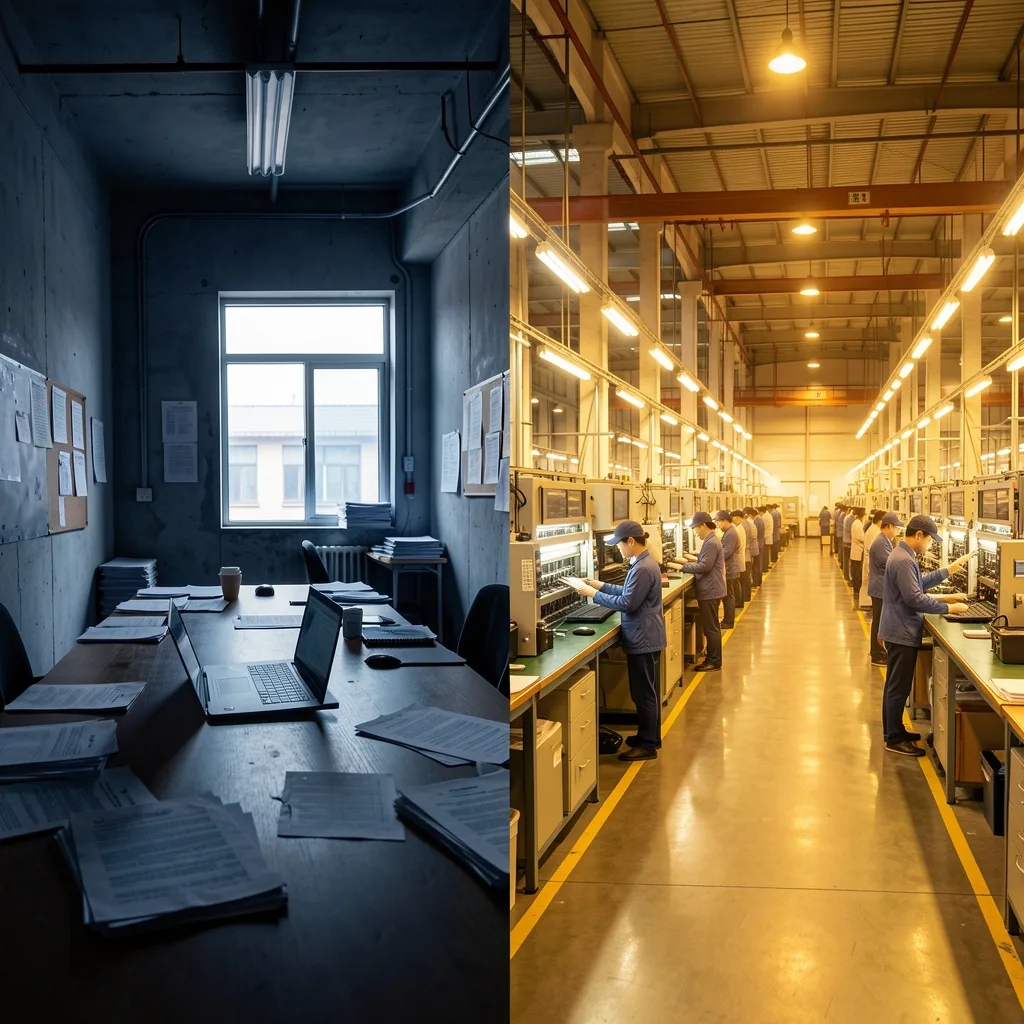
A U.S. home goods company paid a "factory" in China for three years. Communication was smooth, prices reasonable. Then they tried to visit — and discovered there wasn't a production facility. Their supplier was a sourcing agent posing as a manufacturer, applying hidden markups near 40%.
They didn't skip verification because they were careless. They treated it as a single yes/no question instead of what it actually is: a layered process where each step reveals more and costs more. With China registering over 24,000 new companies per day in 2024, the question isn't whether you'll encounter a questionable supplier — it's whether your process catches them before your money leaves.
Four layers of progressive trust. Free document checks first, then a live video call, then a sample order, and only when the order value justifies it, a paid audit. The vast majority of problem suppliers get filtered in the first two layers — before you spend a dollar.
1 Verify the Business on Paper
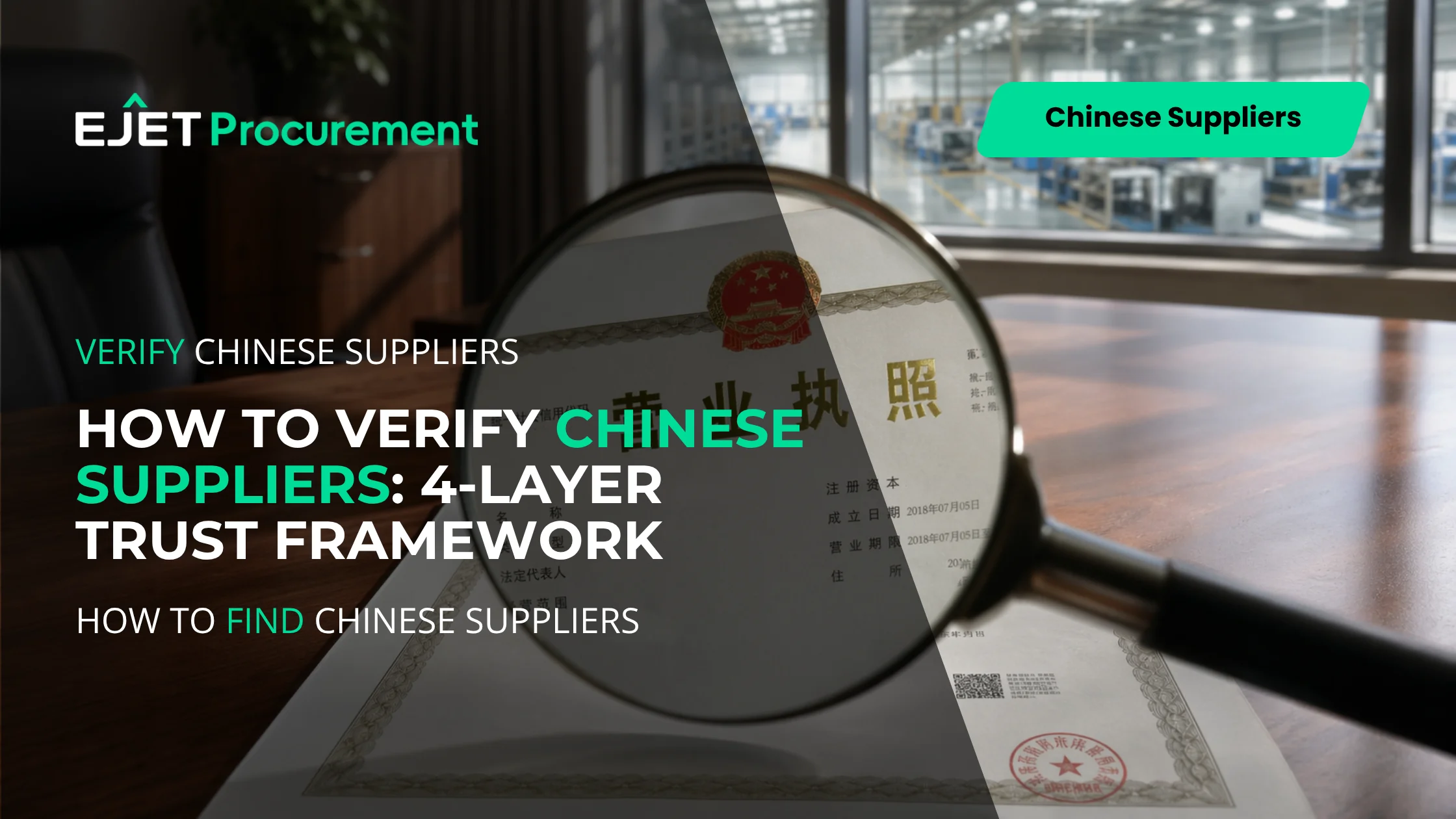
Ask your supplier for their business license number (统一社会信用代码). If they hesitate, you already have your answer.
Run that number through three databases. NECIPS (gsxt.gov.cn) — China's official registry — shows legal name, registration date, registered capital, and business scope. One detail most buyers miss: Chinese company names start with a location identifier. A supplier claiming to be a Guangzhou factory whose name starts with "浙江" (Zhejiang) is a mismatch worth questioning.
Then check Credit China (creditchina.gov.cn). It reveals tax blacklists and dishonest debtor lists that NECIPS won't show. A company can look clean on NECIPS and still appear on Credit China's debtor list. Cross-reference on Qichacha (qcc.com) for equity structure, legal disputes, and related companies.
Most buyers stop at confirming the company exists. Confirm it exports. China's Commerce Ministry database verifies import-export licenses. A registered manufacturer with no export license and no customs records is either brand new to exporting or not what they claim.
About Alibaba badges: Alibaba's own 2026 buying guide states that Gold Supplier status only confirms the business paid an annual fee and passed a basic identity check. Badges tell you a company paid for visibility — not that it can deliver your product at your volume. If you're safely sourcing from Alibaba, treat badges as a starting point.
Layer 1 takes 30 minutes and costs nothing.
2 Run a Live Video Factory Tour
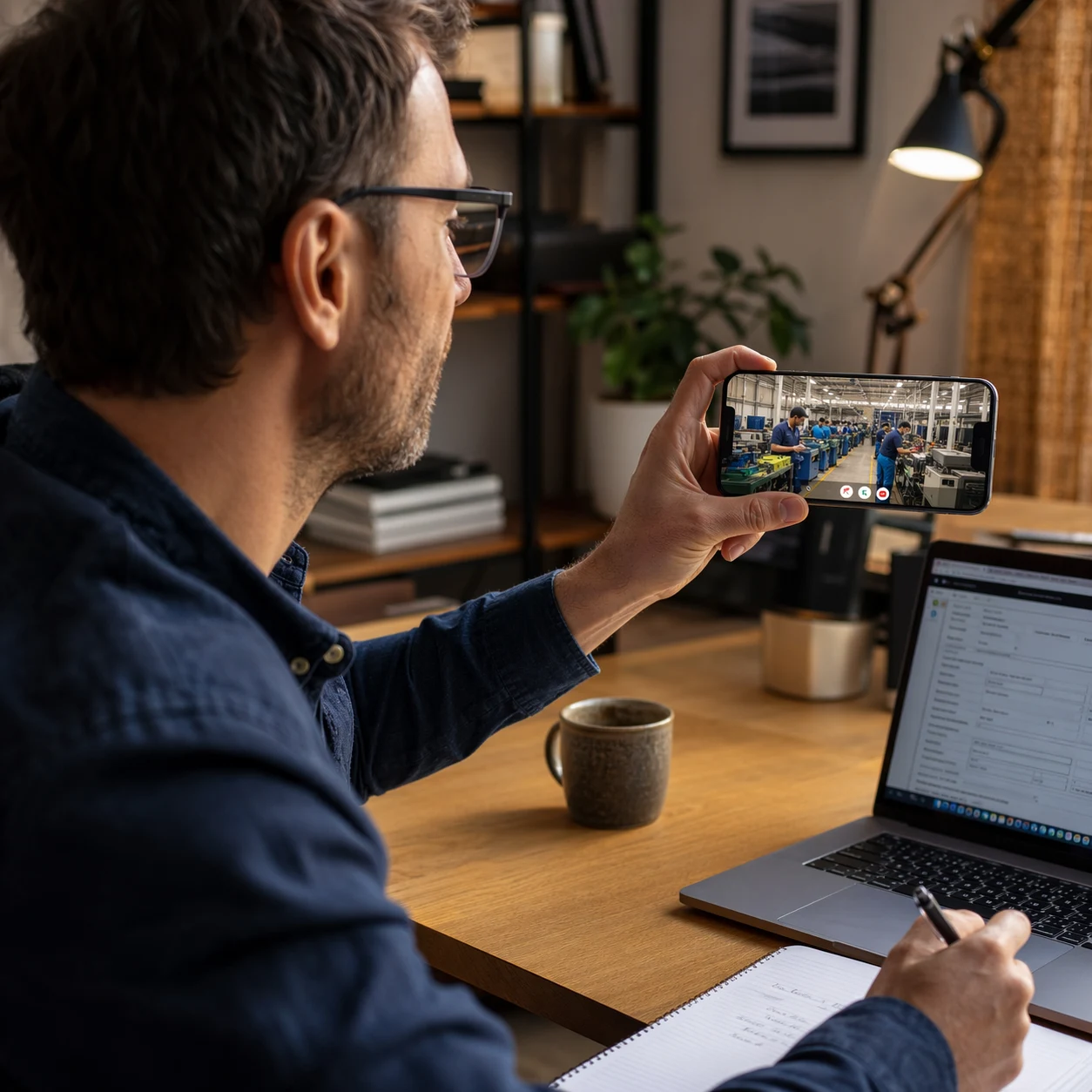
Documents prove a company exists. A video call proves it operates.
Request a live call on WeChat or WhatsApp — not a pre-recorded tour. Give 24-48 hours' notice during Chinese business hours. Ask them to walk from the front gate to the production floor without cutting the video. A real factory has connected spaces; a trading company borrowing a facility will fumble this transition.
On the floor, ask to see machines running. Ask two questions trading companies struggle with: "What's your monthly electricity bill?" and "How many shifts do you run?" A factory owner knows instantly. A middleman stalls or gives round numbers that don't match the facility.
One case I come back to: an American company wired $2 million to what they believed was a manufacturer. It turned out to be a single consultant in a co-working space. A 60-second live video call would have revealed there was no factory at all.
If your supplier can't do a live video call, move on.
3 Use Your Sample Order as a Test
A sample order tests more than product quality — it stress-tests communication, packaging accuracy, and deadline reliability.
Track three things that have nothing to do with the product itself. Did they hit the delivery date? A supplier who misses a sample deadline by two weeks will miss production by two months. Did the invoice come from the same company you verified in Layer 1? Payment requests from a different entity — especially a personal account or offshore company — are a serious mismatch. Did they communicate proactively about issues, or did you chase them?
For orders under $5,000, Layers 1-3 are usually enough to decide. Treat the sample as your last free look at how this supplier works — and a chance to avoid common sourcing mistakes before committing.
4 When a Paid Audit Is Worth It
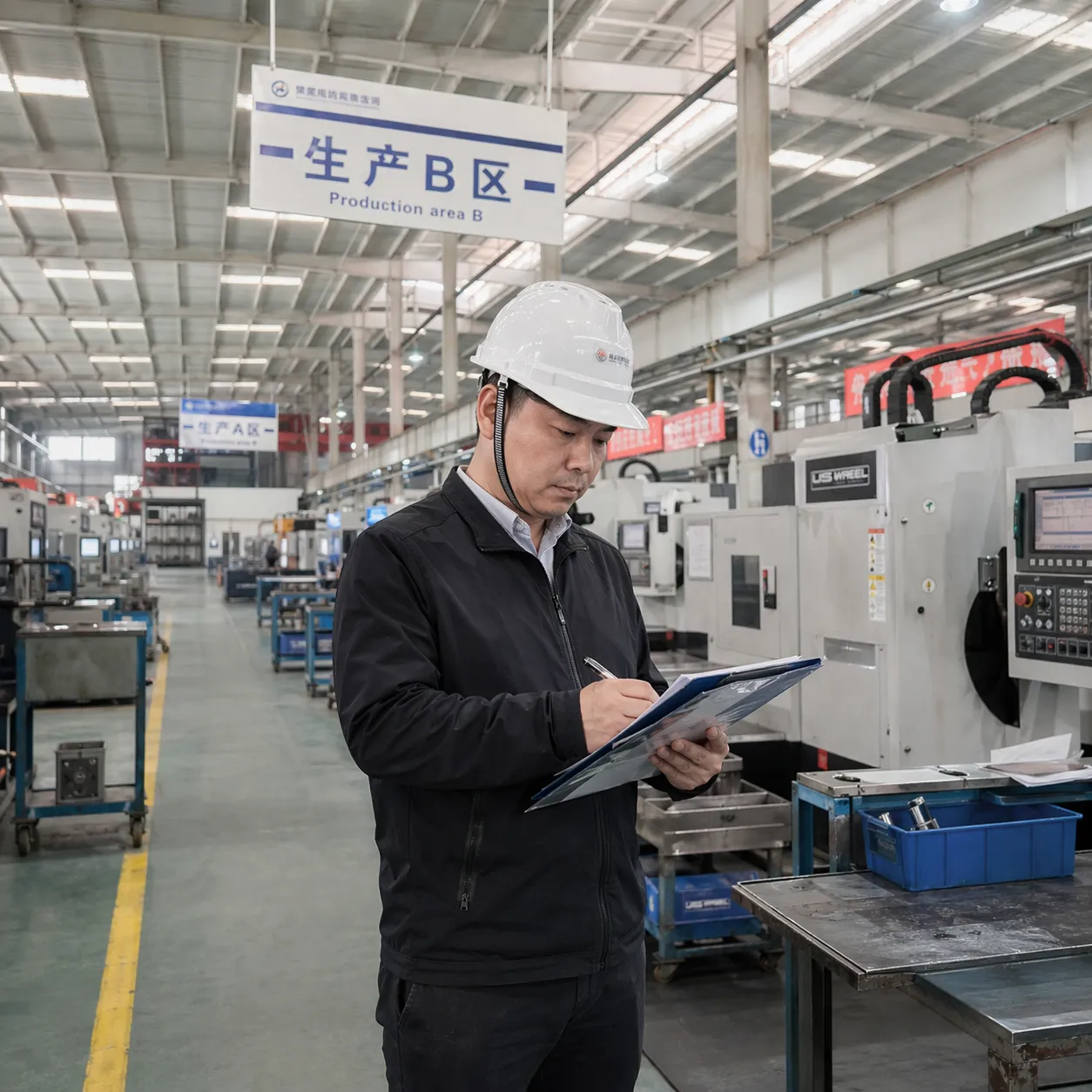
If your order exceeds $20,000 or you're committing to a long-term relationship, a paid on-site audit is justified. Here's why: 59% of audited Chinese factories passed compliance reviews in 2024. That means 41% failed — among factories that agreed to be audited. The real failure rate is almost certainly higher.
At this stage, the audit isn't about catching fraud (Layers 1-2 handled that). It's about confirming production capacity, quality systems, and working conditions before serious money moves. Some importers handle this through sourcing agents with on-ground teams in China's manufacturing hubs — firms with established supplier networks and systematic factory verification protocols can compress weeks of due diligence into days. For a detailed breakdown, see the factory audit process.
| Order Value | Recommended Action |
|---|---|
| Under $5,000 | Layers 1-3 are sufficient. Skip the paid audit. |
| $5,000 – $20,000 | Judgment call — consider audit if risk factors exist. |
| Over $20,000 | Paid on-site audit is justified and recommended. |
Red Flags That Stop Everything
Some signals should halt your process at any layer.
Payment Red Flags
Requests to personal bank accounts, offshore accounts when the factory is on the mainland, 100% upfront payment, or Western Union/crypto. Legitimate factories expect 30/70 splits.
Identity Mismatches
Legal representative on NECIPS doesn't match your contact. Company established two years ago but claims "10+ years experience." Registered address is residential or a co-working space.
Behavioral Warning Signs
Generic factory photos that reverse-image-search to stock sites. Business scope that doesn't match the products offered. Registered capital too low for claimed production volume — 500,000 RMB doesn't run a facility producing $2 million in annual exports.
The progressive trust model works because each layer makes the next more efficient. A supplier who passes documents but refuses a video call just saved you the cost of a sample. Trust the sequence. For the full picture on managing suppliers after verification, see the complete supplier vetting and management framework.
FAQs
Start With 30 Minutes, Not $30,000
Run the NECIPS check, Credit China check, and export license check today — on every supplier still on your shortlist. The ones who survive all three are worth a video call. The ones who survive the video call are worth a sample order. Only the ones who prove themselves through the full sequence deserve your production deposit.
