

This 2026 guide to sourcing from China to Mexico explains how Mexican importers can navigate supplier selection, shipping options, Incoterms, customs duties, IVA cash-flow impact, and documentation requirements. Building a repeatable China-to-Mexico import workflow to control risk, cost, and quality as volumes scale.
Why Sourcing from China to Mexico is a Smart Move in 2026?
Mexico is one of the most attractive markets for importers because it sits at the intersection of strong domestic consumption, manufacturing demand, and international trade. Businesses import into Mexico to supply local retail, power e-commerce brands, support industrial buyers, and feed manufacturing or assembly operations. At the same time, Mexico's import environment can be complex for first-time buyers due to documentation requirements, customs processes, and the importance of selecting the correct import pathway.
China remains a powerful sourcing origin for Mexico because it offers a broad product variety, competitive pricing, and flexible manufacturing options for private label and OEM projects. In 2026, sourcing from China to Mexico continues to be profitable for buyers who treat it as a system rather than a one-off purchase.
The difference between a smooth import and an expensive headache typically comes down to:
-
Clear product specifications and stable supplier communication
-
A defined customs strategy that matches Mexico's import rules
-
Reliable quality control before goods ship
-
Accurate documentation and consistent shipment data
-
Landed cost planning that includes tax, duty, and local handling
What Mexico Imports from China and What Performs Well?
Mexico imports a wide range of goods from China across consumer, retail, and industrial segments. The most common sourcing categories reflect Mexico's growing e-commerce demand, strong retail networks, and ongoing industrial activity.
Common Categories Imported into Mexico
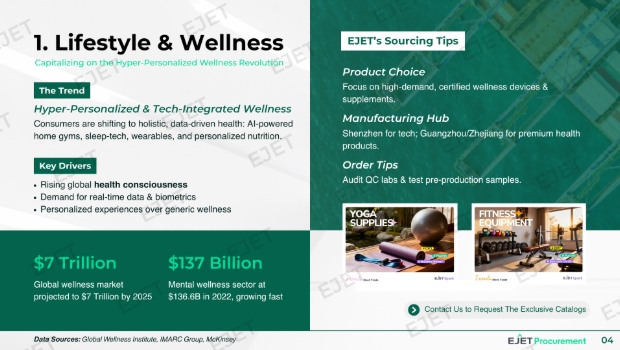
We have helped nearly 100 Mexican buyers complete their sourcing from China. Based on the EJET 2025 annual report, we have summarized the following 8 categories of products that Mexico imports the most.
-
Home and kitchen products that appeal to practical household spending
-
Lifestyle accessories and everyday consumer items that sell well in online channels
-
Packaging materials and printed items used by local brands and distributors
-
Tools, hardware items, and trade-related supplies
-
Furniture and décor, especially compact and value-oriented items
-
Electronics accessories, cables, and low-complexity add-ons
-
General retail merchandise for discount and convenience channels
-
Industrial parts and components when cost and availability are priorities
Mexico-Specific Demand and Channel Realities
Mexico is a market where the distribution structure matters. Many businesses sell through:
-
Local distributors and wholesalers
-
Retail chains and independent shops
-
Marketplaces and social commerce channels
-
B2B accounts that require repeatable availability
Because these channels rely on consistency, supplier reliability becomes a bigger driver of long-term profitability than "one cheap shipment." A supplier that cannot repeat quality will create downstream costs in Mexico: returns, disputes, stockouts, and reputation damage.
Mexico is also price-sensitive in many product segments. That does not mean customers accept low quality. It means importers must protect quality while keeping landed costs predictable. The importers who win in 2026 are the ones who build stable supply lines with controlled defects and controlled costs.
Shipping from China to Mexico: How Importers Choose Methods?
Shipping from China to Mexico is a decision about speed, cost per unit, and operational control. Mexico importers typically choose between express shipping, air freight, and sea freight based on their volume and urgency.
Express Shipping
Express shipping is best for sampling and small urgent cartons. It lets you test product quality and supplier reliability quickly. However, scaling with express shipping is usually difficult because the cost per unit can become too high, especially for bulky items.
Express is ideal when you are in the early stage of sourcing products from China: you want to validate the supplier, test packaging strength, and confirm whether the product sells in Mexico before committing to larger volume.
Air Freight
Air freight is used when timing matters but the shipment is too large for express pricing to make sense. Mexico importers often use air freight for:
-
Launching a new product with a tight sales window
-
Restocking a proven bestseller to avoid stockouts
-
Seasonal demand spikes
-
Higher-value products where speed protects margin
Air freight still requires strong documentation discipline. If invoice data and packing list data are inconsistent, clearance can slow down regardless of how fast the cargo arrives.
Sea Freight (LCL and FCL)
Sea freight is typically the long-term option for scaling because unit economics improve significantly as volume grows.
-
LCL is suitable for smaller shipments when you do not fill a container.
-
FCL becomes the most controllable option once you scale, especially when you consolidate multiple SKUs or multiple suppliers.
Sea freight requires planning. Lead times are longer, and delays become expensive if documentation issues cause storage fees or clearance bottlenecks. For Mexico importers, the best approach is to plan shipments around your sales cycle rather than trying to rush inventory when demand is already high.
Shipping advisory: Sea freight rates from China to Mexico often surge around the CNY shutdown due to factory closures and reduced labor availability. To avoid peak pricing, plan container shipments after the holiday whenever possible. In recent weeks, 40-foot high cube container rates have risen from approximately USD 2,000 to USD 8,000.
Incoterms and Transparency (EXW vs FOB vs DDP)
Through our 20+ years in freight forwarding, we summarize this conclusion. For businesses importing into Mexico at scale, FOB offers the best balance between cost transparency, risk control, and repeatability. While EXW and DDP may look attractive in specific scenarios, they often create hidden costs or operational blind spots that make long-term planning more difficult.
-
EXW can look cheap but makes you responsible from the factory gate, which can be risky if you are new.
-
FOB is often preferred because the supplier handles export-side delivery and export clearance, while you control main freight and the Mexico import plan.
-
DDP can feel convenient, but it may reduce transparency around duties, taxes, brokerage choices, and local fees.
|
Incoterm |
Who Controls the Process |
Cost Transparency |
Key Advantages |
Key Risks for Mexico Importers |
Best Use Case |
|
EXW (Ex Works) |
Importer controls from factory gate onward |
Low |
Appears cheaper at first glance |
High operational risk for new importers; exporter-side logistics, export clearance, and compliance fall on the buyer |
Experienced importers with strong China-side logistics control |
|
FOB (Free On Board) |
Supplier handles China-side export; importer controls main freight and Mexico import |
High |
Clear cost breakdown; balanced risk allocation; easier landed-cost calculation |
Requires the importer to manage freight and Mexican customs correctly |
Most Mexican importers aiming for repeatable, scalable imports |
|
DDP (Delivered Duty Paid) |
Supplier or third party controls end-to-end delivery |
Low |
Operationally simple; minimal coordination |
Limited visibility into duties, IVA, brokerage, and local fees; harder to audit the true landed cost |
Small test shipments or buyers prioritizing convenience over control |
If your goal is repeatable imports into Mexico, clarity is more valuable than convenience. You want a structure where you can calculate landed cost accurately and keep the process consistent.
Mexico Import Taxes, Duties, and Customs Reality in 2026
Mexico's import costs are shaped by:
-
Declared customs value
-
Duty treatment based on classification
-
IVA and other taxes depending on the import pathway
-
Brokerage, handling, and local fees
-
Domestic distribution costs after clearance
IVA as a Cash-Flow Factor
IVA is one of the most important realities for Mexico importers. Even when your business can recover taxes through your accounting structure, timing matters. If you scale imports, the amount of tax tied up in shipments and clearance can become a working capital constraint.
That is why experienced importers model IVA timing and cash requirements upfront. They do not only ask, "How much profit per unit?" They ask, "How much cash is required to land inventory and keep the pipeline moving?"
Duties Depend on Correct Product Classification
Duty is not a fixed number you can assume across all products. It depends on classification, materials, and intended use. Misclassification is one of the fastest ways to create:
-
Unexpected duties
-
Clearance delays
-
Reclassification disputes
-
Extra costs that destroy margin
To protect your business, treat HS classification and accurate product description as foundational steps, not last-minute paperwork.
Documentation Discipline is the Difference Between Smooth Clearance and Delays
Mexico customs processes can be efficient when documents are correct and consistent. Delays often come from predictable issues:
-
Vague product descriptions that do not match the goods
-
Invoice and packing list inconsistencies
-
Incorrect quantities, carton counts, weights, or dimensions
-
Unrealistic valuation practices that raise questions
-
Missing or unclear importer details
When a shipment is delayed, the cost is not only financial. It is operational. Your inventory plan breaks, your sales channel suffers, and your team spends time solving avoidable problems.
Import Pathway Strategy in Mexico: What Many Buyers Get Wrong?
Mexico has different import pathways depending on your business model. Some businesses import for resale in Mexico, others import as part of manufacturing or assembly operations, and others import for distribution through partners. The correct pathway depends on how your company is structured and how you plan to sell.
A common first-time mistake is treating Mexico like a "simple destination." Buyers focus only on product cost and shipping cost, then discover late that the import structure requires specific documentation steps or that clearance procedures vary by product type and import purpose.
The best approach is to define your pathway before production:
-
Who is the importer of record
-
How invoices and declarations should be structured
-
How the goods will be distributed after clearance
-
How you will manage taxes and duties in your cash flow
-
When these pieces are designed early, imports become repeatable.
How to Find Suppliers and Reduce Risks in China?
Mexico importers can find suppliers quickly, but long-term success comes from verifying suppliers and controlling quality.
Wholesale Sourcing Platforms
Wholesale platforms(Like Alibaba, Global Source, and 1688) are useful for building a shortlist and comparing pricing ranges. They help you discover manufacturers and traders across many categories. But listings do not guarantee manufacturing capability or consistent quality.
Mexico buyers should treat platforms as discovery tools and then verify:
-
Is the supplier a factory or a trading company
-
Can they maintain consistent quality at scale
-
Do they have stable lead times
-
Can they produce Mexico-ready packaging and labeling consistently
-
Do samples match what you want, repeatedly, not just once
Wholesale Markets and Trade Shows
Markets and trade shows help you compare products fast and meet suppliers face-to-face. Yiwu is often used for general merchandise, variety-based sourcing, and retail-ready products. Larger trade fairs like the Canton Fair can be stronger for manufacturer relationships, OEM projects, and technical categories.
The winning approach is discovery first, verification second, scaling third.
Using a China Sourcing Agent or China Buying Agent
For Mexico buyers, a sourcing agent reduces risk and improves repeatability. The value is not just finding a supplier. The value is building a reliable system across verification, sampling, production control, inspections, consolidation, and documentation.
A strong sourcing partner helps you:
-
Shortlist suppliers based on capability, not just price
-
Verify legitimacy and reduce fraud risk
-
Manage sampling and prevent version confusion
-
Follow production to prevent silent changes
-
Run quality inspections before shipment
-
Consolidate multiple suppliers into one shipment
-
Keep documents consistent for smoother clearance
-
Coordinate logistics in a way that protects your margins
EJET Procurement supports end-to-end sourcing services that include supplier verification, factory audit, sample coordination, order follow-up and quality inspection, warehousing and consolidation, export documentation, logistics coordination, and after-sales support.
If you want help building a reliable China-to-Mexico sourcing pipeline, you can get a free quote for sourcing from China to Mexico here.
A Practical China-to-Mexico Sourcing Workflow that Stays Profitable in 2026
Start with a Clear Product Specification File
A specification file should define materials, measurements, tolerances, finishing standards, packaging requirements, labeling instructions if needed, and acceptable defect levels. When you provide a clear spec, suppliers quote the same product, production becomes consistent, and disputes decrease.
Shortlist Suppliers and Verify before Scaling
Do not scale after one conversation and one sample. Shortlisting multiple suppliers gives you leverage and reduces risk. Verification protects your money. Many importers fail not because sourcing from China to Mexico is difficult, but because they scale too early with an unreliable supplier.
Sample in Rounds and Lock the Bulk Version
Sampling should confirm both product quality and packaging consistency. If changes are needed, confirm them through revised sampling. Before mass production, lock the final version so the bulk order matches what you approved.
Put Quality Control before Shipment
Quality control is cheapest at the factory stage. It is expensive after arrival in Mexico. Pre-shipment inspection reduces the chance that you pay for defective inventory and then pay again for replacement.
Consolidate and Simplify
If you source multiple SKUs or multiple suppliers, consolidation reduces shipping cost per unit and reduces paperwork complexity. Fewer shipments also means fewer clearance events and fewer opportunities for errors.
Build a Repeatable Landed-Cost Model
A model should include product cost, freight, duty/tax impact, brokerage and handling, and domestic distribution. If you only plan product cost plus shipping, you will be surprised later.
Plan Inventory Around Mexico Sales Cycles and Lead Times
Mexico demand can spike around promotional periods, holidays, and seasonal shifts. The safest approach is to plan inventory so it lands before demand peaks. If you try to rush inventory once demand is already high, you often pay premium freight and still risk stockouts.
FAQ
Is Sourcing from China to Mexico Still Worth it in 2026?
Yes, especially for businesses that want product variety and scalable supply. Profit depends on supplier verification, consistent quality control, and a clean import plan that matches Mexico's customs reality.
What Shipping Method is Best for Mexico Imports?
Express is best for samples and small urgent shipments. Air freight works for timing-sensitive inventory. Sea freight is typically best for scaling due to the lower cost per unit. The best option depends on shipment size and margin.
How do I Avoid Customs Delays in Mexico?
Use accurate product descriptions, keep invoice and packing list data perfectly consistent, confirm classification early, and ensure quantities and carton data match the shipment.
Should I Use a China Sourcing Agent for Mexico Imports?
If you cannot visit suppliers frequently, if you are sourcing multiple SKUs, or if quality consistency matters, a sourcing agent can reduce risk and make the process repeatable.
What is the Biggest Mistake Mexico Importers Make?
Scaling too early without stable supplier verification, clear specifications, and pre-shipment quality control. A single bad batch can create tax exposure, clearance headaches, and expensive domestic distribution problems.
