

Every year, thousands of buyers fly to Yiwu expecting to solve their sourcing problems. But most leave with samples, a WeChat contact list, and no clear path forward. The problem is that they misunderstood what Yiwu is for.
Yiwu International Trade City is the world's largest wholesale market. There are 75,000+ booths, 6 districts, 2.1 million product varieties, and buyers from 230+ countries. It offers unmatched product discovery. But discovery is only the first step in sourcing and Yiwu doesn't cover the rest.
Most Yiwu guides tell you what the market is. This guide covers what Yiwu Market actually solves, what it doesn't, and how successful importers use it as part of a complete sourcing system in 2026.
We'll break down Yiwu across six critical dimensions:
-
Definition: what Yiwu actually is in a sourcing system
-
Structure: how districts and supplier types affect your decisions
-
Decision: when Yiwu makes sense and when it creates risk
-
Cost: why booth prices don't reflect your real margins
-
Verification: how to bridge the gap between sample and production
-
Execution: what happens after you find a supplier and why most buyers fail there
This is not a travel guide. It's a sourcing decision framework.
What Is Yiwu Market? And Why Most Buyers Misunderstand It
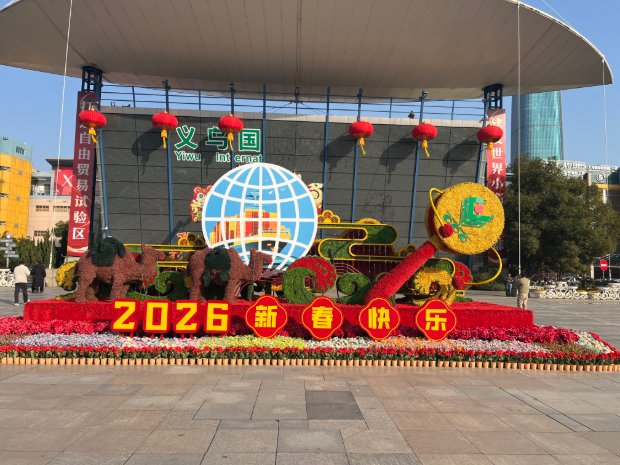
Yiwu Market, officially Yiwu International Trade City, also known as Futian Market, is the world's largest small commodity wholesale market, located in Yiwu, Zhejiang Province, China. Around 80% of the world's Christmas products($13 billion) are manufactured in China, from trees and decorations to lighting and seasonal accessories. Yiwu sits at the center of this ecosystem, acting as a global distribution hub where these products are aggregated, displayed, and sourced by international buyers.
It fundamentally changes how sourcing works.
In most sourcing channels before, buyers could only compare a handful of suppliers at a time. In Yiwu, you can compare 100+ within a single day. This allows buyers to quickly establish a baseline for pricing, product variations, and supplier positioning across an entire category.
But this advantage comes with a limitation:
-
That density of information not only makes the market powerful, but also makes it difficult to navigate.
-
The market shows you what exists, not which option is right for you.
-
It exposes you to supplier options without giving you the tools to evaluate them.
The Core Misunderstanding: Yiwu Is an Information Channel, Not a Sourcing Solution
Most guides describe Yiwu as "the place to buy everything cheap." Honestly, that framing is wrong and even costly. Yiwu Market should be used for product and supplier discovery, not for validation or order execution.
Yiwu gives you access to information, not the ability to act on it. Visible information ≠ actionable sourcing intelligence.
And that's where the problem begins. Most sourcing failures don't happen at the product finding stage. They happen afterward in production, quality control, and logistics.
|
Capability Area |
What Yiwu Gives You |
What Yiwu Does NOT Give You |
|
Discovery |
High-efficiency product discovery |
— |
|
Comparison |
Side-by-side supplier comparison |
— |
|
Market Insight |
Real-time trend observation |
— |
|
Product Evaluation |
Physical product inspection before sampling |
— |
|
Verification |
— |
Verified factory capability |
|
Production |
— |
Production quality consistency |
|
Execution |
— |
Order execution and follow-through |
|
Risk Control |
— |
Risk management or local control |
What's Inside Yiwu: Districts, Products & Niche Markets
Yiwu International Trade City is organized into 6 districts, each with distinct product categories, supplier types, and buyer profiles. Beyond the Trade City, Yiwu also contains 5 major niche markets and 14 specialized wholesale streets, all of which operate independently and serve different sourcing needs.
Understanding this structure is not just useful for navigation. It tells you which type of supplier you can find and what you can realistically expect from them.
The 6 Districts at a Glance: What Each Zone Sells and Who It's For?
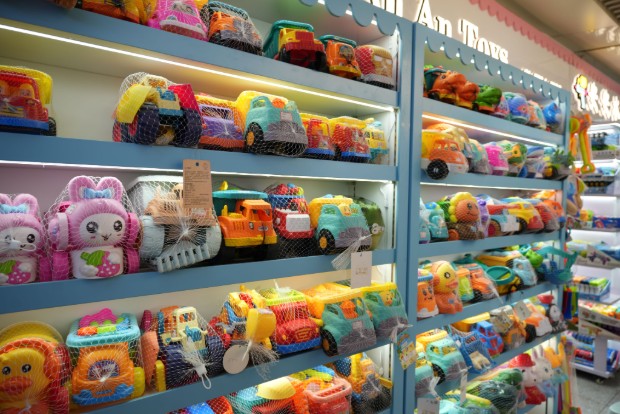
District 1: Toys, Accessories & Handicrafts
The most accessible district for first-time buyers and cross-border e-commerce sellers, featuring a wide range of suppliers offering licensed-style products and trend-driven consumer goods. It covers a wide range of small consumer goods, including toys, fashion accessories, jewelry, hair products, and seasonal decorations.
Supplier types here are primarily traders and showroom operators offering low MOQ and mixed-order flexibility, making it suitable for:
-
Testing new SKUs
-
Building a product assortment
-
Small-batch sourcing for e-commerce
Tip: buyers should note that most suppliers are not direct manufacturers, and product consistency at scale requires further verification.
District 2: Hardware, Electronics & Industrial Products
The core district for functional and utility-driven products, attracting buyers looking for hardware, tools, electrical equipment, luggage, and small appliances. It covers a wide range of categories, including locks, power tools, lighting products, electrical accessories, and entry-level electronics.
Supplier types here are a mix of traders and factory-linked distributors, with some closer connections to upstream manufacturing clusters. MOQ tends to be higher than in District 1, and product specifications are often more technical. This district is suitable for:
-
Sourcing functional or utility-based products
-
Comparing technical specifications across suppliers
-
Identifying factory-linked suppliers for stable categories
Tip: buyers should note that booth presence does not guarantee manufacturing capability, and technical products require stricter alignment with specifications and verification before ordering.
District 3: Stationery, Cosmetics & Clothing Accessories
A category-focused district serving buyers sourcing office supplies, beauty products, and apparel-related components. It includes stationery, sports goods, cosmetics, buttons, zippers, and various clothing accessories.
Supplier types are primarily specialized traders and category-focused suppliers, many of whom support private label and customized packaging. This district is suitable for:
-
Private label and branding opportunities
-
Buyers looking for packaging and small component suppliers
Tip: product quality and compliance (especially for cosmetics) vary significantly, and buyers should verify certifications, ingredient standards, and regulatory requirements for their target market.
District 4: Daily Necessities, Textiles & Footwear
One of the highest-volume districts, focused on everyday consumer goods and textile-based products. It covers socks, underwear, towels, home textiles, and general household items.
Supplier types are a mix of traders and large-scale production-linked suppliers, often offering competitive pricing for bulk orders. This district is suitable for:
-
High-volume sourcing of stable, repeat products
-
Identifying cost-efficient suppliers for daily-use items
-
Building long-term supply for commodity categories
Tip: price competition is intense, and quality differences between samples and bulk production can be significant. Consistency across orders requires structured quality control.
District 5: Imports, Bedding & Cross-Border Services
The most internationally oriented district, which is designed for both export and import-oriented trade. It features the African Product Exhibition Center (50+ countries) and the ASEAN Product Exhibition Center (Thai latex pillows, Vietnamese coffee). Floor 5 hosts official partner zones for Amazon and TikTok, serving e-commerce sellers.
Supplier types here include international traders, brand distributors, and service providers supporting logistics, e-commerce platforms, and export operations. This district is suitable for:
-
Buyers exploring imported or internationally branded goods
-
Cross-border e-commerce sellers seeking service support
-
Identifying partners for logistics, fulfillment, and platform integration
Tip: product sourcing here is less about factory access and more about distribution and services, which may not align with buyers looking for direct manufacturing relationships.
District 6: Global Digital Trade Center (GDT)
The newest and most evolving district, positioned around digital trade and emerging product categories. It focuses on medical aesthetics, drones, robots, AR/VR devices, fashion fabrics, and baby products.
The GDT integrates cross-border data channels for real-time overseas procurement and an office-showroom model for merchants combining R&D with sales. This district signals Yiwu's shift from a pure export hub toward a two-way, technology-integrated trade platform. This district is suitable for:
Exploring emerging product categories and new trends
Identifying innovation-driven suppliers
Buyers looking for future-oriented or differentiated products
Tip: many suppliers are still in development stages, and product maturity, production stability, and scalability require careful evaluation before committing to orders.
Want to learn more about the district information? Read our detailed guide.
District 1: Toys, Accessories & Handicrafts
District 2: Hardware, Electronics & Industrial Products
District 3: Stationery, Cosmetics & Clothing Accessories
District 4: Daily Necessities, Textiles & Footwear
District 6: Global Digital Trade Center (GDT)
Where to Buy Popular Products from Yiwu Market?
In addition to navigating Yiwu by districts, buyers can also approach sourcing by product categories. This view focuses on what to source and where those categories are most commonly concentrated.
Here is a table for trending categories and their zone.
|
Category |
Why It Matters |
Where It's Concentrated |
|
Seasonal & trend-driven goods |
Short product cycles, high turnover |
District 1, 4 |
|
Fashion accessories |
Low MOQ, fast iteration, e-commerce friendly |
District 1 |
|
Home & daily goods |
Stable demand, volume-driven sourcing |
District 4 |
|
Electronics accessories |
Price-sensitive, utility-based demand |
District 2 |
|
Cosmetics & beauty tools |
Strong private label potential |
District 3 |
|
Pet products |
Rapid global category growth |
District 5 (and across multiple districts) |
|
Emerging & innovation-driven products |
New categories, tech-integrated goods, evolving trends |
District 6 (GDT) |
Beyond the Trade City: Yiwu's 5 Niche Wholesale Markets and 14 Specialized Streets
Yiwu's sourcing ecosystem extends well beyond the Trade City. It's home to 5 niche markets and 14 special streets. These sourcing places have developed reputations for their quality and variety. They serve not only local vendors but also attract international buyers.
Five major niche markets serve industry-specific buyers:
-
Huangyuan Clothing Market (No.180, Jiangbin Middle Road): Men's, women's, children's, and sportswear. OEM/ODM services, export compliance testing. Bulk orders from 1,000–5,000 units; trial runs from 100–500 units.
-
Yiwu International Production Material Market (No.1566, Xuefeng West Road): Textiles, hardware parts, eco-packaging. Links to 2,000+ upstream factories.
-
Yiwu Furniture Market (No.1779, Xicheng Road): Modern, traditional, and contract furniture. FSC-certified wood, custom OEM, hotel contract sourcing.
-
Yiwu Material Market (No.88, Beiyuan Road): Building materials, industrial chemicals, sustainable packaging. Minimum orders from 100kg for trial runs.
-
Zhezhong Timber Market (No.369, Dongcheng Road): FSC/PEFC-certified timber, processed wood, imported Russian and Canadian timber.
And more, 14 specialized wholesale streets offer stock lots and raw materials at up to 80% off factory prices. 5 Key streets include:
-
Meihu & Wuai Stock Streets: Clothing, jewelry, toys, shoes, bags (stock lot pricing)
-
Changchun Ornament Street: Natural stones, crystals, pearls, copper fittings
-
Xingzhong Jewelry Street: Hair accessories, rhinestone jewelry, zippers
-
Binwang Cosmetics Street: Skincare, makeup, perfumes, beauty tools
-
Zhaozhai Street: Digital products, photo frames, lighters, smoking accessories
Tip: These streets are where agents and experienced buyers find the lowest prices and where first-time buyers rarely go.
Should You Source from Yiwu? A Decision Framework
Whether to source from Yiwu International Trade City is not a question about the market. It's a question about which sourcing stage you are in. Yiwu is highly valuable at one stage and actively counterproductive at another.
Here is a clear framework to decide:
|
Scenario |
Yiwu Is a Good Fit |
Yiwu Is NOT a Good Fit |
|
Sourcing stage |
Early-stage discovery |
Scale / repeat orders |
|
Supplier status |
No clear shortlist or have a longlist |
Already have vetted suppliers |
|
Product goal |
Exploring new categories |
Scaling existing products |
|
Evaluation need |
Physical comparison of samples |
Factory verification & compliance |
|
Order size |
Small batch / testing |
Large volume production |
|
Quality requirement |
Basic evaluation acceptable |
Strict consistency required |
|
Supplier type expectation |
Traders / showroom suppliers acceptable |
Need direct factory relationships |
|
Relationship goal |
Short-term exploration |
Long-term supplier partnerships |
Tip: Yiwu's advantage is discovery efficiency, not execution reliability. Using it at the wrong stage creates systematic sourcing risk.
How Successful Importers Actually Use Yiwu Market?
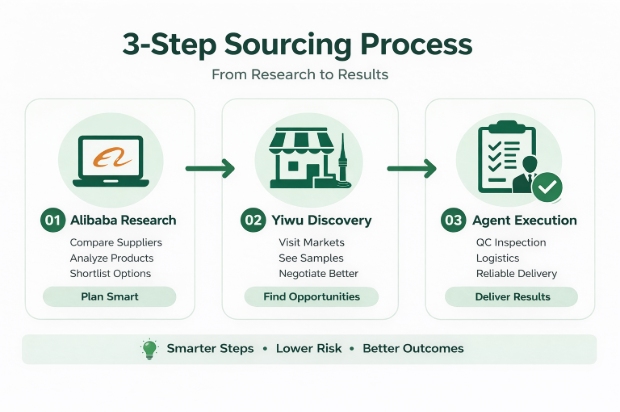
Choosing whether to use Yiwu International Trade City is only the first step. What matters more is how it fits into a complete sourcing process. Here is a simple three-step flow to make your sourcing strategy more effective.
Step 1: Use Alibaba to initiate research, supplier filtering, and category benchmarking
Step 2: Visit Yiwu Market for in-person discovery, physical comparison, and sample collection
Step 3: Hire a sourcing agent for supplier verification, production management, execution, and quality control
Each step solves a different part of the sourcing problem:
|
Channel |
What It Solves |
What It Cannot Do |
|
Information breadth, remote filtering |
Deep validation, physical evaluation |
|
|
Yiwu Market |
In-person discovery, comparison |
Verification, production control |
|
Sourcing agent |
Execution, risk management, local control |
Initial product discovery with low cost |
The buyers who fail in Yiwu are those who stop at Step 2 and treat discovery as a complete sourcing solution. The buyers who succeed treat Yiwu as one component in a larger system.
The Reality Check: True Costs, Risks & What Yiwu Can't Do
Yiwu's reputation for low prices creates a predictable and expensive mistake: buyers calculate their profitability based on booth prices and then discover the real cost after the order is placed. This section covers the two gaps that most sourcing failures come down to.
The Real Cost of Sourcing from Yiwu: Why Booth Price ≠ Total Landed Cost?
When a supplier quotes you a price at their Yiwu booth, that number represents only one layer of what you will actually pay.
Remenber: Displayed Booth Price ≠ Total Landed Cost
|
Cost Layer |
Included in Booth Quote? |
Notes |
|
Unit price |
Yes |
The number you see |
|
MOQ adjustment |
No |
Price rises sharply at lower quantities |
|
Quality grade gap |
No |
Sample grade often differs from bulk grade |
|
Packaging & compliance |
No |
Often quoted separately, varies by market |
|
Freight & consolidation |
No |
LCL, FCL, or air — added after |
|
Agent / inspection fee |
No |
Buyer's responsibility |
|
Total Landed Cost |
Never shown |
The only number that matters |
A product quoted at $10/unit may land at $13 once all layers are accounted for. Buyers who calculate margins on booth prices routinely discover they are unprofitable after the first shipment.
Why Sample Quality Doesn't Guarantee Production Quality: How to Verify Yiwu Suppliers?
The most dangerous assumption in Yiwu sourcing is that a good sample means a good order.
Yiwu suppliers, particularly traders, routinely source samples from their best production runs or from third parties. The sample you approve in the booth is not necessarily what gets manufactured at scale.
The verification gap has three layers:
-
Sample ≠ production quality: The sample is a sales tool, not a production guarantee
-
MOQ threshold effects: Quality often degrades when orders scale from 500 to 5,000 units
-
Batch consistency: A first order that passes QC does not guarantee the second will
So, how to verify your products and suppliers? The EJET 3-Step Verification Path that closes this gap from sample validation to small batch testing to pre-shipment-insepection .For details, please see the next section.
Yiwu Sourcing Process Explained From Finding a Supplier to Final Delivery
Most buyers think sourcing ends when they find a supplier. In reality, that's only the first step of a much larger process. A complete sourcing workflow looks like this:
|
Step |
Process Stage |
Covered by Yiwu? |
|
Step 1 |
Supplier discovery |
Yes |
|
Step 2 |
Supplier validation |
No |
|
Step 3 |
Product specification alignment |
No |
|
Step 4 |
Production management |
No |
|
Step 5 |
Quality control |
No |
|
Step 6 |
Logistics and delivery |
No |
Yiwu helps you find suppliers. It does not help you manage them. So buyers who succeed treat Steps 2–6 with the same rigor as Step 1.
How to Source from Yiwu Market Effectively?(Step-by-Step)
Effective Yiwu sourcing is about doing the right things before, during, and after your visit. Most buyers get the "during" part partially right and skip the "before" and "after" entirely.
Before You Go: Alibaba Research, Supplier Shortlisting, and What to Prepare
Before You Go: Alibaba Research, Supplier Shortlisting, and What to Prepare
The most common mistake first-time Yiwu buyers make is arriving without preparation. With 75,000+ booths across 6 districts, an unprepared buyer loses 60–70% of their visit to aimless navigation.
The Pre-trip preparation checklist:
-
Research on Alibaba first: Search your target categories, note the price ranges, identify 10–15 suppliers per category, and flag any that have Trade Assurance or Gold Supplier status. This gives you a pricing benchmark before you negotiate in Yiwu.
-
Define your product specification in writing: Material, dimensions, color range, packaging requirements, certifications needed. Bring this document to every booth.
-
Set your MOQ ceiling: Know the maximum units you can commit to for a first order. This prevents you from wasting time with suppliers whose minimums don't fit your stage.
-
Map your Routines: Based on your product categories, identify which districts you need and in what order. Districts 1 and 2 have the highest density for most general buyers.
-
Book an interpreter or agent in advance: English is spoken at a basic level in most booths, but technical discussions about specifications, certifications, and payment terms require negotiation support.
On the Ground: How to Evaluate Booths, Compare Suppliers, and Collect Samples
The goal of your market visit is to build a shortlist of 3–5 suppliers per category for follow-up verification rather than buying.
On-the-ground tactics:
-
Negotiate by carton/piece, never by single unit. Ask: "What is the price for 500 pieces?" Retail-framing signals to suppliers that you are a small buyer and prices will reflect that.
-
Collect business cards and scan WeChat QR codes at every booth, even if you're not interested. Your contact list is a research asset.
-
Ask for samples and don't pay retail for them. For orders of any significant size, samples should be free or at a low cost. Paying full price for samples at a market signals inexperience.
-
Note booth number, floor, and district for every supplier you're interested in. Then, finding a booth again is straightforward if you document it.
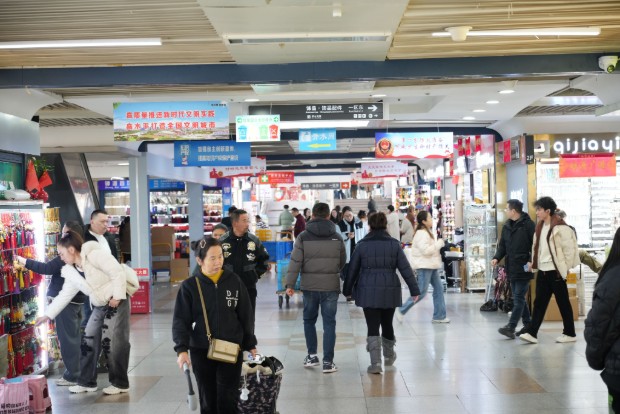
After the Visit: The 3-Step Verification Path
A market visit that ends with samples in a bag and no follow-up plan is a scouting trip, not sourcing. The work begins after you leave Yiwu.
Post-visit process:
-
Shortlist to 3 suppliers per category based on price, sample quality, communication responsiveness, and booth credibility signals.
-
Send a formal RFQ (Request for Quotation) with your full specification document. Comparing responses for inconsistencies in pricing or lead time between the booth conversation and the written quote is a red flag.
-
Execute the 3-Step Verification Path from sample validation to small batch test and pre-shipment inspection.
Step 1 — Sample Validation: Test the Product and the Supplier's Understanding
At this stage, you need to evaluate the product and the supplier's understanding of your requirements.
Focus on two dimensions:
-
Product Quality
-
Material consistency (compare across multiple suppliers)
-
Workmanship (finishing, alignment, durability)
-
Specification match (size, weight, components)
-
Supplier Understanding (Critical but often ignored)
-
Does the sample match your requirements exactly, or are there deviations?
-
Are key details (materials, dimensions, finishing) followed precisely?
-
Does the supplier ask clarifying questions or make assumptions?
Tip: Always compare at least 2–3 suppliers. A single sample gives no benchmark.
Step 2 — Small Batch Testing: Test the Production Process
This is the step most buyers skip and where most failures begin. Instead of scaling immediately, place a test order (e.g., 100–300 units) to evaluate:
-
Consistency between sample and bulk production
-
Defect rate across a batch
-
Stability of materials and components
-
Supplier responsiveness during production
Tip: You are testing the supplier's production process and reliability.
Step 3 — Pre-Shipment Inspection: Control Before Payment
Once goods are shipped, your leverage drops significantly. So, before final payment, verify the bulk order through a structured inspection process:
-
Random sampling inspection (e.g., AQL standard)
-
Quantity and packaging verification
-
Critical defect identification
-
Functional testing (if applicable)
For buyers without local presence in China, Steps 2 and 3 require either a trusted sourcing agent or a China-based team to conduct factory visits, specification alignment, and inspection. Remote verification relying on photos and video calls alone will consistently underestimate quality risk.
Tips for Visiting Yiwu Market
Yiwu is a city built around international trade. Navigating it efficiently requires knowing a few operational realities that most guides skip. These tips apply whether this is your first visit or your fifth.
When to Go, How to Get There, and Where to Stay
Best time to visit:
September–November and March–May are peak sourcing seasons with full supplier availability. The annual Yiwu International Commodities Fair (typically in October) attracts buyers from 200+ countries, but also crowds and premium hotel pricing.
Market hours is 9:00 AM – 4:30 PM (lunch break 12:00–1:00 PM). Open weekends and only closed during the Chinese New Year.
Tip: Avoid Chinese national holidays (Golden Week in early October and Chinese New Year in Jan–Feb), because many booths close or reduce staff.
Getting there:
From Shanghai: ~2 hours by high-speed rail to Yiwu Station
From Hangzhou: ~45 minutes by high-speed rail
Within Yiwu: Metro Line 1 to "International Trade City" station. Parking available via Ring Road for those driving.
Where to stay:
Hotels within 1–2 km of the Trade City are strongly recommended. The area around Futian District has multiple 3–5 star options (Ibis, Marriott, and local business hotels). Staying further away adds 30–45 minutes of daily transit time — significant cost across a multi-day visit.
If you prefer not to plan your visit on your own, working with a local team can significantly improve efficiency. We provide market accompaniment and itinerary planning, helping buyers navigate the Trade City more effectively and avoid common time-loss mistakes.
On-the-Ground Tactics: Language, Negotiation, WeChat, Business Cards
-
Language: English is functional in most booths for basic product discussion. For contract terms, specifications, and dispute resolution, you need a Mandarin-speaking interpreter or agent.
-
Payment accepted at booths: Most transactions are WeChat Pay or Alipay for domestic buyers. Foreign buyers typically arrange payment via wire transfer or through a sourcing agent. Some booths accept USD or EUR for bulk purchases, but this is not standard.
-
Negotiation basics:
-
Quote in carton quantities, not single units
-
Reference competitor booth prices, the market is transparent and suppliers know each other's pricing
-
Never accept the first quoted price; 10–20% negotiation room is typical for new buyer relationships
-
Ask about OEM options, custom packaging, and label printing at every relevant booth
-
Business cards: Bring printed business cards. In Yiwu, a card signals you are a serious buyer. No card signals that you might be a tourist.
What First-Time Buyers Always Get Wrong
-
Treating the visit as a buying trip, not a research trip. You should leave with samples and contacts and not completed sourcing orders.
-
Spending too long in District 1. It's the most accessible and most crowded district. Allocate time proportionally to your actual product needs.
-
Evaluating suppliers only on price. The booth price is the least important variable. Communication responsiveness, sample quality, and production credibility matter far more.
-
Skipping the niche markets and specialized streets. For buyers in clothing, cosmetics, furniture, or raw materials, the niche markets often offer better pricing and more specialized suppliers than the Trade City.
-
Leaving without a verification plan. Most damage happens after the visit. The buyer who leaves Yiwu with 20 supplier contacts and no follow-up system will close zero of them into reliable supply chains.
What Key Changes in the Yiwu Market in 2026? (Every Buyer Should Know)
Yiwu in 2026 is not the same market it was in 2020 or even 2023. Three structural shifts are changing how buyers should approach it — and one of them fundamentally changes how you evaluate suppliers.
Types of Suppliers in Yiwu: Why Booth Location No Longer Tells You Who You're Dealing With
Historically, a buyer could make reasonable inferences about a supplier based on their booth type and location.
-
A booth in the Trade City implied a trader
-
A factory showroom implied direct manufacturing
-
A specialized market implied industry focus
That logic has broken down. In 2026, the dominant pattern in Yiwu is supplier hybridization, merchants who simultaneously operate as traders, maintain factory partnerships, run online storefronts, and offer OEM/ODM services. A single booth may represent 3–7 factories across 2 provinces.
You can no longer judge a supplier's capabilities by their booth location alone.
The practical implication: every supplier requires independent verification, regardless of how they present themselves. A booth in District 2's New Energy Zone does not confirm manufacturing capability for solar products any more than a Huangyuan Clothing Market booth confirms a factory relationship.
How to Verify Suppliers in Yiwu: Why Video Calls Are Not Enough
Remote sourcing infrastructure in Yiwu has matured significantly. Video factory tours, WeChat-based sample review, and cross-border data channels through the GDT (District 6) now allow buyers to conduct preliminary supplier evaluation without a physical visit. This is genuinely useful and genuinely limited.
Video verification works for confirming factory existence, reviewing production line capacity, and inspecting finished goods pre-shipment. It does not work for assessing material quality, identifying process risks, or building the trust relationship that drives supplier accountability.
Physical visits are no longer the only way to evaluate suppliers, but they remain the most reliable way to discover them. The buyers who have shifted entirely to remote sourcing are reporting higher rates of specification mismatch and quality inconsistency. The optimal approach in 2026 is a hybrid: digital for research and filtering, physical for final validation.
What Products to Source from Yiwu in 2026: Faster Product Cycles and District 6
Two 2026-specific dynamics are changing Yiwu's role in global supply chains:
Faster product cycles
Across most categories in the Trade City, especially accessories, seasonal goods, and consumer electronics peripherals, product refresh cycles have compressed from 12–18 months to 4–6 months. New products arrive in booths before they appear on Alibaba or at trade shows.
This makes Yiwu more valuable for trend discovery than it has ever been and less appropriate as a source for long-term stable SKUs, where supplier consistency matters more than product novelty.
District 6 and two-way trade
The Global Digital Trade Center represents a structural shift in Yiwu's identity. The market is evolving from a pure export platform to a two-way trade hub, with imported goods (ASEAN products, branded international goods) and digital trade infrastructure now integrated alongside traditional export categories.
Yiwu is shifting from a commodity export hub to a two-way global trade platform. These implications for how foreign buyers use and navigate it.
Conclusion: Yiwu Is a Starting Point, Not a Complete Solution
Yiwu International Trade City remains the single most efficient place in the world to discover products, compare suppliers, and observe market trends at scale. For that specific job, nothing matches it.
But discovery is one step in a multi-step process. And the buyers who treat Yiwu as a sourcing solution, rather than a sourcing starting point, consistently face the same outcome: good samples, difficult production, and expensive surprises. The buyers who succeed are those who understand this distinction and build the rest of the system around it.
How a Sourcing Partner Bridges the Gap
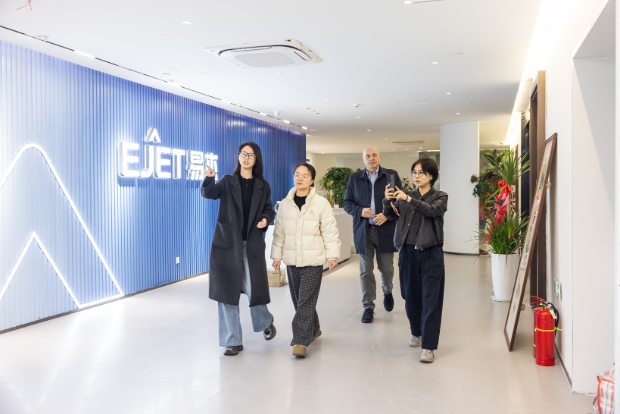
A professional sourcing agent in Yiwu doesn't replace your market visit. They complete the full process with you. EJET Procurement operates in Yiwu, Guangzhou, and Hangzhou,
A professional sourcing agent in Yiwu doesn’t replace your market visit. They complete the full process with you. EJET Procurement operates in Yiwu and Guangzhou, offering one-stop services for buyers across 2 solutions:
Visit China for Sourcing
For buyers who want to explore products in person, visiting Yiwu provides the highest level of visibility and comparison. A complete sourcing process typically includes:
-
Pre-visit consultation and sourcing strategy alignment
-
Customized market visit planning based on your product categories
-
On-site interpretation, supplier communication, and negotiation
-
Quotation comparison and supplier shortlisting
After the visit, the process continues with:
-
Supplier verification and factory audits
-
Sample refinement and specification alignment
-
Order placement and production follow-up
-
Quality inspection (in-process and pre-shipment)
-
Warehousing, consolidation, and international shipping
Offshore Sourcing without Visiting China
For buyers who cannot travel, sourcing can be managed entirely through our local team in Yiwu and Guangzhou.
The process includes:
-
Product sourcing, supplier communication, and quotation comparison
-
Factory audits and sample coordination
-
Order follow-up, production tracking, and quality inspection
-
Warehousing, consolidation, and international shipping
-
Export documentation and after-sales support
Without local support, these steps from supplier verification to production management and logistics coordination fall entirely on the buyer.
If you're planning a Yiwu sourcing trip or want to source without managing the full process yourself, working with a local partner can significantly reduce risk and improve efficiency. You can reach out for a free consultation to discuss your sourcing needs.
FAQ
Can foreigners buy from Yiwu Market?
Yes. Yiwu International Trade City is fully open to international buyers with no special permit required. Most booths have basic English-speaking staff, and the market infrastructure, including logistics, payment, and interpretation services, is built for foreign buyers. For first-time visitors, engaging a local sourcing agent significantly reduces friction.
When is Yiwu Market open?
Yiwu International Trade City operates Monday through Saturday, 9:00 AM – 4:30 PM (lunch break 12:00–1:00 PM). The market is open on weekends, except during the Chinese New Year.
What are the minimum order quantities (MOQs) at Yiwu Market?
MOQs vary by supplier type and product category. Trader booths typically start at 50–100 units; showroom and factory-direct booths often require 500–5,000 units. MOQ is also quality-dependent — the price and minimum you're quoted for a display sample may differ significantly from production-grade quantities. Always confirm MOQ in writing, not just verbally at the booth.
How do you buy from Yiwu Market step-by-step?
The most effective process is: (1) Research on Alibaba first to benchmark pricing and identify supplier categories; (2) Visit Yiwu to compare suppliers in person, collect samples, and build a shortlist of 3–5 per category; (3) Send formal RFQs with full product specifications; (4) Run a small batch test before committing to full production; (5) Conduct pre-shipment inspection before payment release. Skipping Steps 4 and 5 is where most sourcing failures originate.
What is Yiwu Market famous for?
Yiwu Market is famous for being the world's largest wholesale market for small commodities, with 75,000+ booths across 6 districts offering 2.1 million+ product varieties. It supplies over 80% of the world's Christmas decorations. It is also known for its accessibility to international buyers serving importers from 230+ countries and its role as a global trend discovery hub for consumer goods.
Yiwu or Guangzhou which is better?
Neither is universally better — they serve different sourcing needs. Yiwu excels in small commodities, daily necessities, accessories, and seasonal goods, with lower MOQs and a broader product mix. Guangzhou is stronger for apparel, fabrics, electronics, and higher-end manufacturing, with more direct factory access. For buyers sourcing diverse product categories at low-to-mid volume, Yiwu is typically the better starting point. For buyers focused on garments or electronics at scale, Guangzhou warrants priority.
Which is the biggest wholesale market in China?
Yiwu International Trade City (Futian Market) is the world's largest wholesale market, spanning 6.4 million square meters across 6 districts with 75,000+ businesses and 2.1 million product varieties. No other single market location in China or globally matches its scale, product diversity, or volume of international buyer traffic.
